linux.do becomes a JetBrains-shaped forum
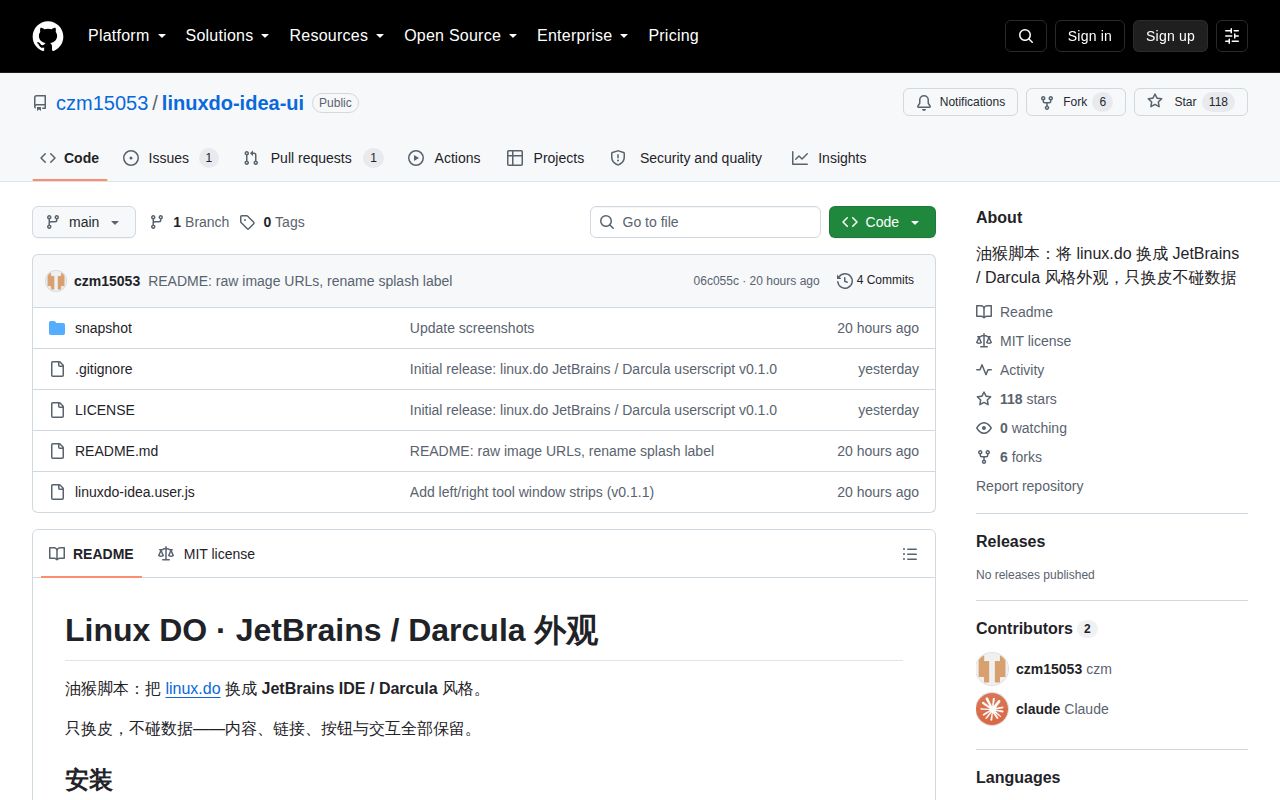
The userscript changes the visual grammar of one website. On the linux.do home page, topic rows resemble a Git log with SVG lanes. Inside a topic, posts become editor-like reading panels that can mimic Java or Python. Sidebars resemble a Project view, notifications resemble an Event Log, and decorative tool-window bars borrow names from JetBrains products. The main README is Chinese and links no English documentation, so non-Chinese readers must inspect the source or translate the page before deciding what the extra controls mean.
This treatment is more ambitious than a color theme. It restructures how forum content appears, generates code-like wrapper lines around posts, changes image presentation, replaces the favicon, and adds product switching. The README says original content, links, buttons, and interactions remain. Source metadata limits the script to https://linux.do/*, requests @grant none, and runs at document-start. Those declarations reduce its reach, although code running in the page still shares the context of the site it changes.
What happened when we ran it
We did not run commit 06c055c. Our sandbox recognized JavaScript but found no supported package ecosystem and no Dockerfile, so the harness had no defined installation, build, or test route. There are no timings, dependency counts, test totals, or audit results to infer. For this kind of repository, the normal experience is installation through a userscript manager rather than a Node project, but the missing lab path still means we cannot report verified browser behavior.
Static inspection shows a userscript marked version 0.1.1. It stores the selected IDEA or PyCharm mode in localStorage, injects a large style sheet, adds interface fragments, and uses DOM observation to keep the skin applied as the forum navigates without full reloads. Those details explain how it attempts to support a single-page application. They do not prove that every page state works, that the site remains accessible, or that future linux.do markup will match the selectors.
The theme changes reading, not only color
The strongest idea is the topic-page transformation. Forum replies often have repetitive metadata and loose visual boundaries; presenting each post as a file-like editor panel can make authors, post numbers, and content blocks feel distinct. The optional handling for inline images also addresses a real interruption by collapsing them until hover or click. Users can follow the site's light, dark, or automatic mode while keeping the JetBrains motif.
The same choices can become tiring. IDE menus and tool strips occupy attention even when their buttons are decorative. Turning prose into generated code lines adds visual syntax that the author never wrote. A multi-lane graph beside a normal topic list may look clever while making quick scanning slower. The README says narrow screens hide the tool-window strips, but it does not discuss keyboard order, screen-reader output, high-contrast modes, or reduced motion. That missing evidence matters more here because the script rearranges reading surfaces.
Version 0.1.1 depends on live forum markup
Site-specific userscripts inherit a maintenance problem: they target DOM classes and structures owned by someone else. linux.do can change a topic row, composer, sidebar, or navigation event without coordinating with this repository. The script's observers may then miss content, duplicate injected elements, or leave a half-themed page. A package manager cannot detect that kind of breakage, and our lab had no browser route that could exercise it. The practical rollback is the userscript manager's disable switch.
GitHub shows the repository was created on August 24, 2026 and pushed the next day. The fetched issue list had one user asking for a VS Code style; the repository's combined open count was 2 because GitHub includes pull requests in that number. There was no latest release endpoint result, so version 0.1.1 lives in the script metadata rather than a tagged delivery history. This is a fresh experiment, not evidence of compatibility across many linux.do revisions.
CSS-only theming is the calmer alternative
Stylus is a better fit when the desired change is typography, spacing, or color. A CSS-only theme has fewer ways to alter content structure and is easier to disable piece by piece. Dark Reader is better when the request is simply a usable dark palette across websites. Violentmonkey remains a suitable host for this script, but choosing a manager does not validate the code installed inside it. Review updates just as you would review a browser extension permission change.
linuxdo-idea-ui is easy to understand as a personal art project: one forum is made to feel like an IDE. Its narrow match and @grant none metadata are sensible boundaries, and the MIT license permits adaptation. The missing sandbox run leaves the central questions unanswered, especially page coverage and accessibility. Install version 0.1.1 only if the visual conceit sounds useful enough to tolerate occasional breakage, and keep the original linux.do view one click away.