The editor package is smaller than the hosted product
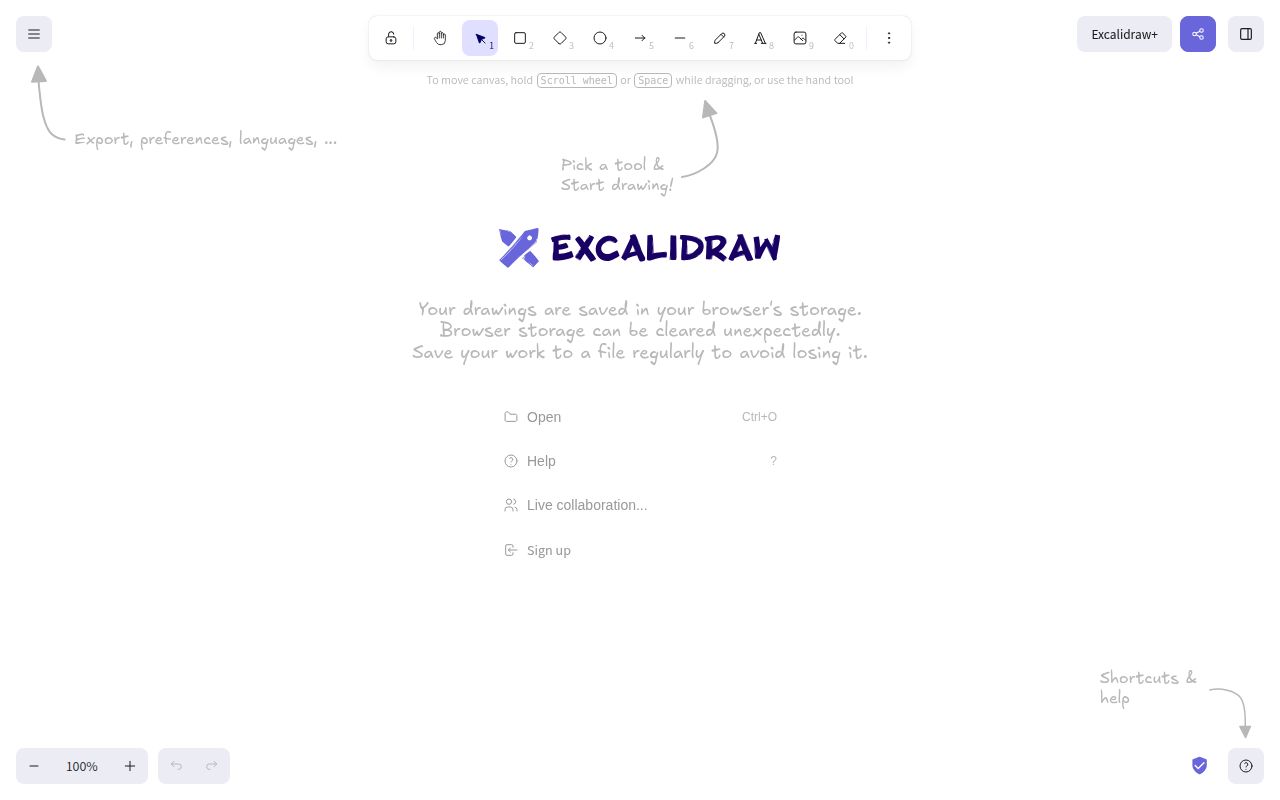
Excalidraw is often described as a whiteboard, but developers need to separate two products in this repository. The npm package is the canvas editor: shapes, arrows, free drawing, images, libraries, undo, zoom, localization, and PNG or SVG export. Excalidraw.com wraps that editor in a progressive web app with browser autosave, live collaboration, end-to-end encryption, and read-only sharing. That distinction decides how much work follows an install.
The package is a good fit when a React application needs sketching inside an existing workflow. Drawings can be exported as an .excalidraw JSON file, so users are not restricted to a flattened image. The loose hand-drawn style also changes how diagrams are received. Early architecture thoughts and wireframes look provisional, which can invite edits more readily than a polished chart.
React is required, and collaboration is still application work
The quick start installs React, React DOM, and @excalidraw/excalidraw. That is pleasantly direct for an existing React product. It is less useful to a Vue, Svelte, native, or server-rendered application that wants a framework-neutral component. A team can isolate the editor behind its own boundary, but that is integration work the documented package does not remove.
Collaboration deserves the same precision. The README lists real-time collaboration, encryption, offline support, local browser saving, and shareable links under Excalidraw.com. It then says those features may become drop-in plugins for the npm package in the future. That sentence is an aspiration, not a current package promise. If your product needs shared rooms, durable files, identity, recovery, or access rules, budget for the host application and backend.
What happened when we ran it
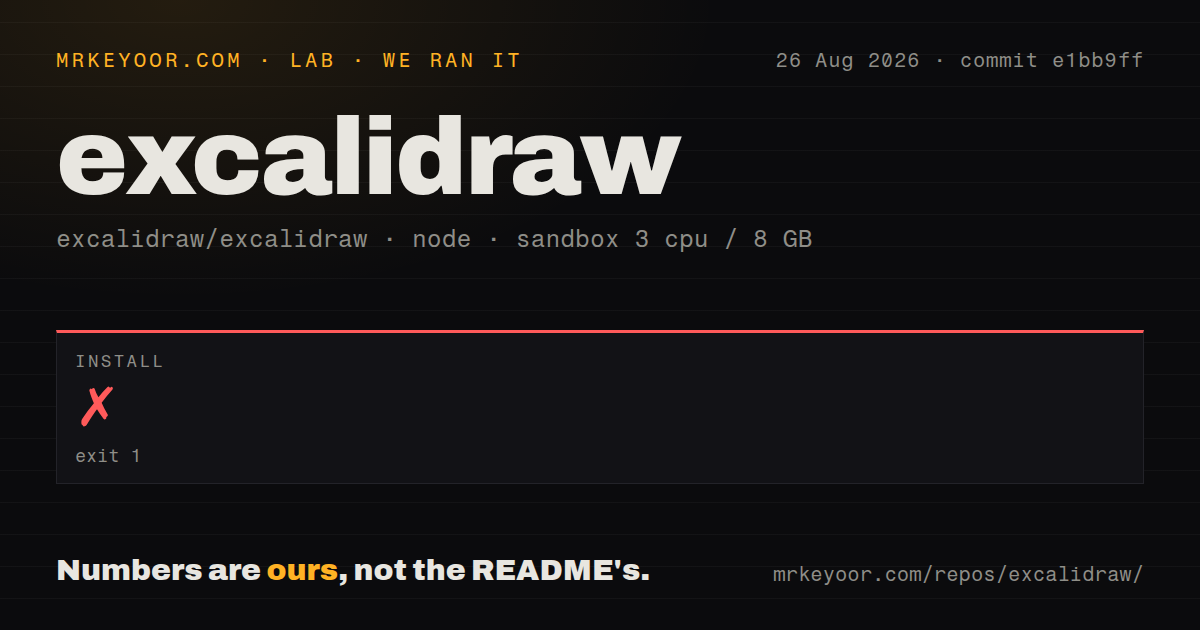
Our sandbox cloned commit e1bb9ff and ran the repository install with 3 CPUs and 8 GB of RAM. The checkout had 1,271 files, about 197,620 lines of source, and occupied 55.7 MB. yarn install failed with exit code 1 after 40 seconds, so we did not proceed to a build or test result.
The useful error was specific. Yarn 1.22.22 reached dependency fetching, warned about incompatible strip-ansi resolutions, then rejected marked@16.4.2. That package declared Node 20 or newer, while the install process reported Node 18.20.8. The log does not establish why that runtime was selected despite the lab image label, so it would be speculation to blame the repository, container, or package manager.
A clean source setup therefore needs a runtime check before a long workspace install. The repository is a monorepo with Yarn workspaces, 11 CI workflow files, a Dockerfile, and a compose file. There is no top-level tests directory in our scan. Those signals show serious project machinery, but they do not turn the README's package command into a contributor setup guide. The README correctly points source developers elsewhere.
The open file format is the strongest integration feature
The JSON drawing format is more useful than it first appears. A host product can keep editable scene data, let users return to a drawing, and also produce PNG, SVG, or clipboard output. Shape libraries and localization broaden the editor without forcing every team to build its own palette. Arrow binding and labels cover the common diagramming moves that a plain canvas library leaves to its integrator.
That freedom has a boundary. Excalidraw documents a drawing tool, not a modeling system that knows whether a network diagram is valid or whether a flowchart matches executable code. Teams needing governed symbols, generated infrastructure, or schema validation should look at a more formal diagram editor. Excalidraw is strongest when humans are communicating an idea and can tolerate loose structure.
A 2026 security release shows active maintenance
GitHub recorded 130,570 stars, 3,396 combined open issues and pull requests, and a last push on August 26, 2026. The open count is not a bug count, and the same-day push matters more than the size of that queue when judging whether the code is moving. Eleven CI workflow files also indicate that the maintainers automate several repository checks.
The latest GitHub release was v0.18.1 on April 21, 2026. Its notes call it a security patch for the 0.18 line, backporting a mitigation for an upstream Mermaid cross-site scripting flaw and pinning a TypeScript type package for compatibility. That is useful evidence of maintenance. It also tells teams embedding rendered Mermaid content to keep the editor dependency current rather than treating a working canvas as finished forever.
Pick Excalidraw for sketches, not a turnkey workspace
For an existing React product, the editor package has a sensible job and an MIT license. Users get familiar drawing tools, editable files, dark mode, images, reusable shape libraries, and several export routes. The host keeps control of where a drawing appears and how it connects to the rest of the product.
The buying decision changes when the requirement says shared whiteboard platform. Excalidraw.com proves that the editor can sit inside one, but its collaboration and encrypted sharing are app features today. Running that experience means understanding the full repository and its services. Our failed 40-second install is a modest warning to reproduce the contributor environment first. For sketching inside React, Excalidraw is still the first project I would trial; for governed diagrams or a ready-made team workspace, compare the alternatives before committing.