1. It is a catalog, not one application
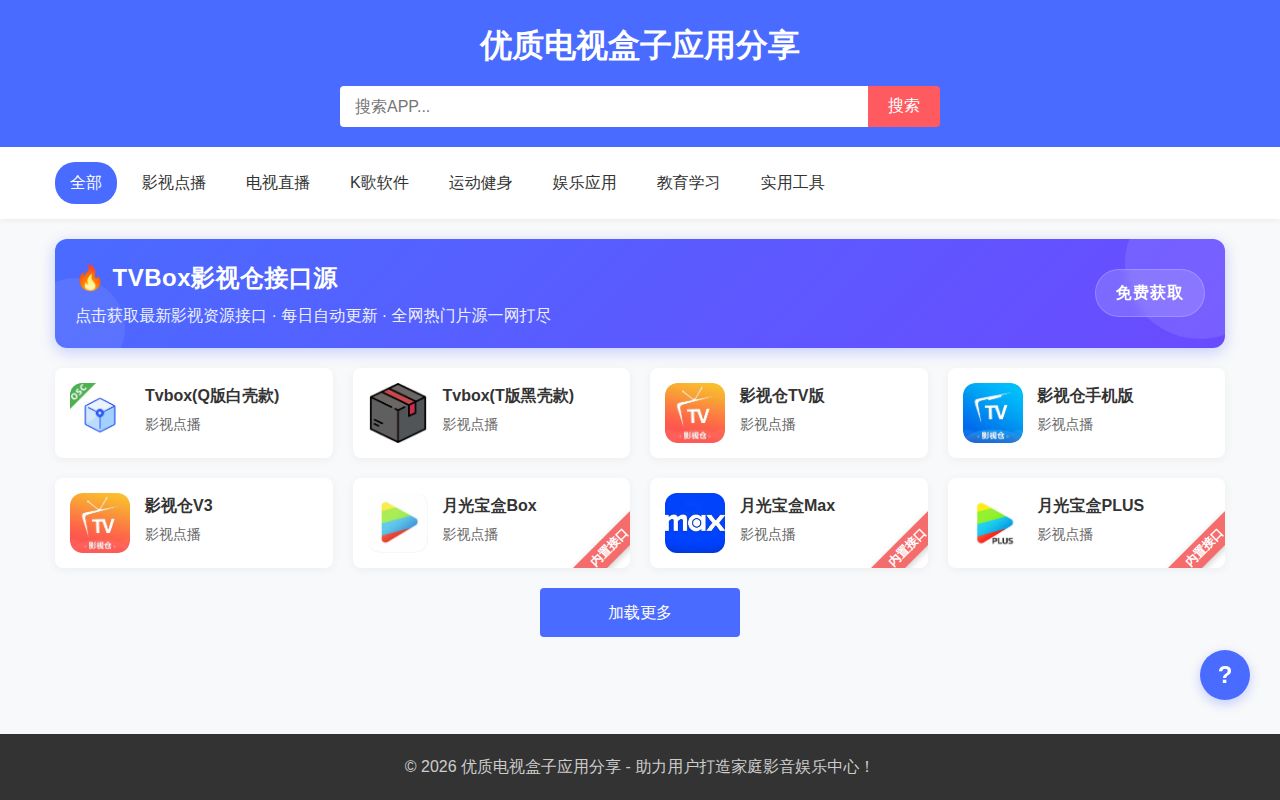
TVAPP is a Chinese-language distribution index for Android TV software. Its README organizes players, karaoke packages, games, utilities, interface sources, and live-TV sources into a table with versions, direct downloads, status lights, compatibility notes, and setup hints. Its 22,763 GitHub stars show substantial attention, but popularity is not review of every binary. No English documentation is evident in the supplied excerpt, so non-Chinese readers will need translation and may miss warnings inside individual rows.
The repository is labeled JavaScript, yet the visible experience centers on APK files and links rather than a single JavaScript service. TVBox 20260901 is described as an empty shell needing an interface source, while 影视仓 v6.2.7 requires Android 6.0 or newer. Other entries are preconfigured, modified, or described as having membership features unlocked. Each package therefore has its own developer, behavior, update path, and trust model.
2. Our run stopped before setup
Our 2026-09-06 run used a fresh, unprivileged Debian container with 3 CPUs and 8 GB of RAM. We could not clone the repository. The measured log gives no further cause, so blaming networking, repository size, permissions, or Git configuration would be speculation. Since cloning was the first blocked step, we did not install anything, run a build, or execute tests. We also could not inspect the checked-out tree or connect listed APKs to source code.
That failed clone is a material finding for a repository acting as a software shelf. Our box produced no reproducible route from repository to APK and no verification of the download table. It does not prove the downloads are broken or unsafe. It means this 2026 review cannot confirm setup beyond the README, and the green status circles should not be read as our own compatibility, security, or playback results.
3. The table saves experienced users time
The strongest feature is specificity. The README distinguishes standard and Pro variants, names Android requirements, and identifies packages that arrive empty or preloaded. FongMi影视 v5.6.3 points to folder-level version notes, Kodi v22.0 is described as a general media player, and XMBOX v3.1.6 needs a user-supplied source. That is much more useful than a directory of unexplained filenames because readers can reject unsuitable options before sideloading.
Compatibility coverage is broad. 影视仓V3 v3.0.36 and 七星影仓V3 v3.0.35 target older Android 4.x devices, while 小猫影视 v2.6.0-1 claims Android, Windows, macOS, iOS, and Linux support. The catalog also separates video-on-demand, live television, and karaoke. For a technically confident Chinese-speaking owner maintaining an old set-top box, these platform and version notes can reduce trial and error.
The status column admits failures. 七星影仓 v6.1.7 is red, and OurTV v3.9.5 is marked stopped after its developer ceased relaying television signals. 酷9直播 v2.0.4 includes steps for selecting a subscription source and restarting. These details make the page look actively maintained, though they remain publisher claims rather than results measured on our 3-CPU box.
4. Binary provenance is the central weakness
Direct APK convenience creates a serious verification burden. The excerpt includes packages described as modified, ad-free, VIP, permanently activated, or bundled with data sources. It does not show checksums, signatures, bills of materials, reproducible-build instructions, or a source link for each binary. An Apache-2.0 repository license does not by itself establish the license or redistribution rights for every APK, stream, film source, or karaoke catalog. The personal-study-only warning makes this especially unsuitable as a business dependency.
A green circle beside v5.1.6 cannot promise that a source endpoint will stay online, that content rights apply in a user's country, or that an embedded service protects privacy. Some entries require viewing an advertisement to activate Pro features, while others claim unlocked membership. Those differences introduce distinct payment, account, privacy, and update risks. Versioned filenames help identify artifacts, but no listed repository release provides a stable snapshot, changelog, or rollback point.
The Chinese documentation is useful for choosing but thin on verification. In the supplied excerpt, there is no security policy, signature-checking workflow, permissions review, isolation advice, or tested-device matrix. A user can see that 影视仓 needs Android 6.0, but not who signed its APK or how that file was derived. The catalog lowers discovery effort while leaving the hardest safety questions to the reader.
5. Current activity is stronger than release process
Health looks active because the last push was 2026-09-07, the date of this review. The supplied data reports 0 open issues and 22,763 stars, while the community item recorded 22,508 stars. Recent code activity and visible adoption argue against calling the project abandoned. The lack of a listed release does not cancel that signal because repositories can stay active without regularly cutting tags.
Still, 0 open issues is ambiguous rather than proof of exceptional support. It might reflect fast triage, limited tracker use, or a deliberately clean queue, and the evidence does not distinguish them. With no latest release listed, there is no release cadence to judge. Users should rely on dated rows, recent commits, and repository instructions, not assume a formal support channel or stable 1.x lifecycle.
6. It belongs at the discovery edge
In a home stack, use TVAPP to identify candidates, then verify each candidate's upstream repository, signature, Android permissions, data sources, and regional legality. Testing on a spare Android 6.0 device or isolated TV box is more sensible than placing an unknown APK beside cameras, storage, and personal accounts. Keep known-good installers and configuration backups because a source can vanish without a coordinated repository release.
For media you own, Kodi or Jellyfin offers a clearer architectural center. Kodi v22.0, which TVAPP itself lists, is a single media-center project; Jellyfin separates a self-hosted server from client apps. FongMi/TV is closer when the goal is one Android player with inspectable history. TVAPP remains useful above those tools as a changing catalog, but it should not decide what code is trusted, what content is lawful, or what reaches a household network.