Evaluate Horizon by what it selects and leaves out
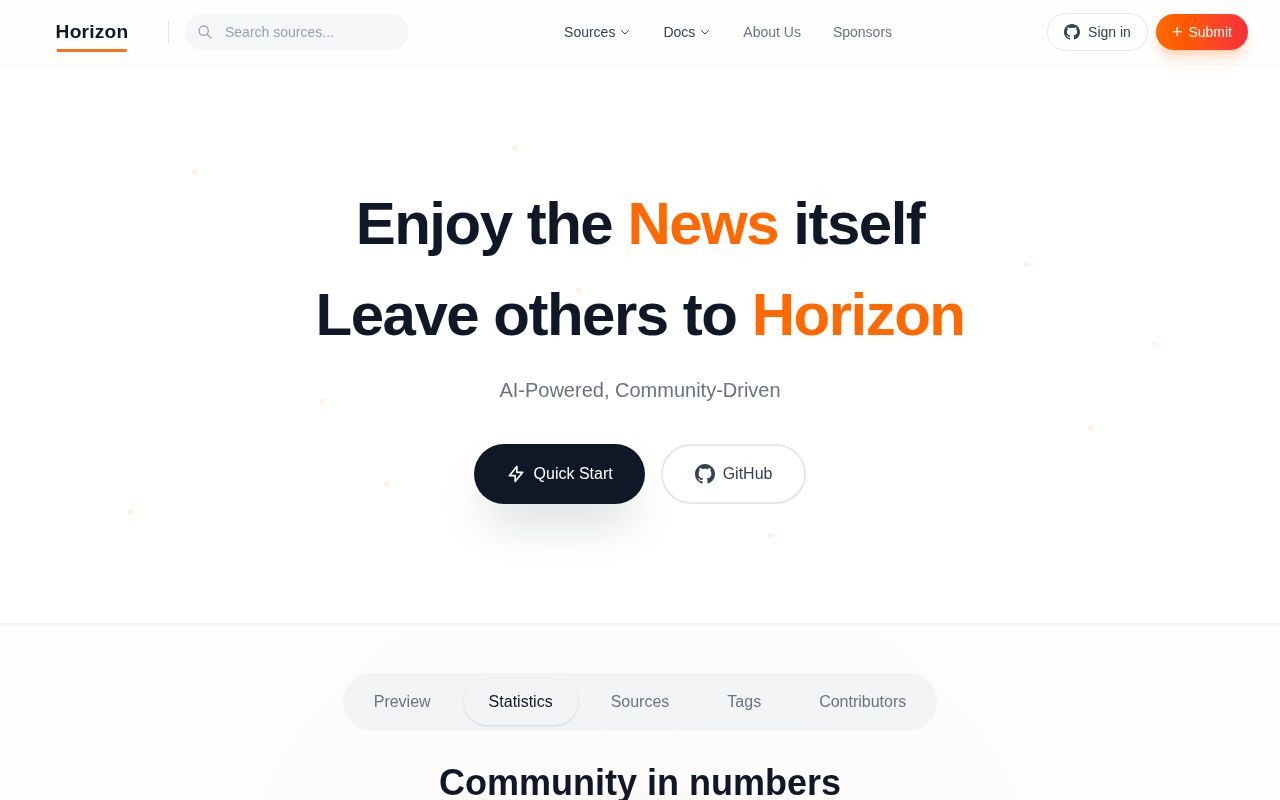
Thysrael Horizon is a candidate for developers who want AI to select articles and turn them into a briefing. Its processing profiles let you edit the matching rules, scoring prompts and output instructions. The useful question is whether those rules produce the reading selection you want.
The profile guide describes Markdown prompts and a JSON block definition. Each item goes to one profile, including when AI chooses among candidates. You can copy a profile and change its prompts without changing Python when you use the existing block type and tools. Editable instructions make the policy inspectable; they do not establish how well a model follows it.
For an initial evaluation, keep the original items from a source you already read and compare them with a generated briefing. Check rejected articles as well as included ones. A readable summary cannot show whether the selection omitted something you needed. This is a proposed evaluation, not a result from the sandbox.
What happened when we ran it
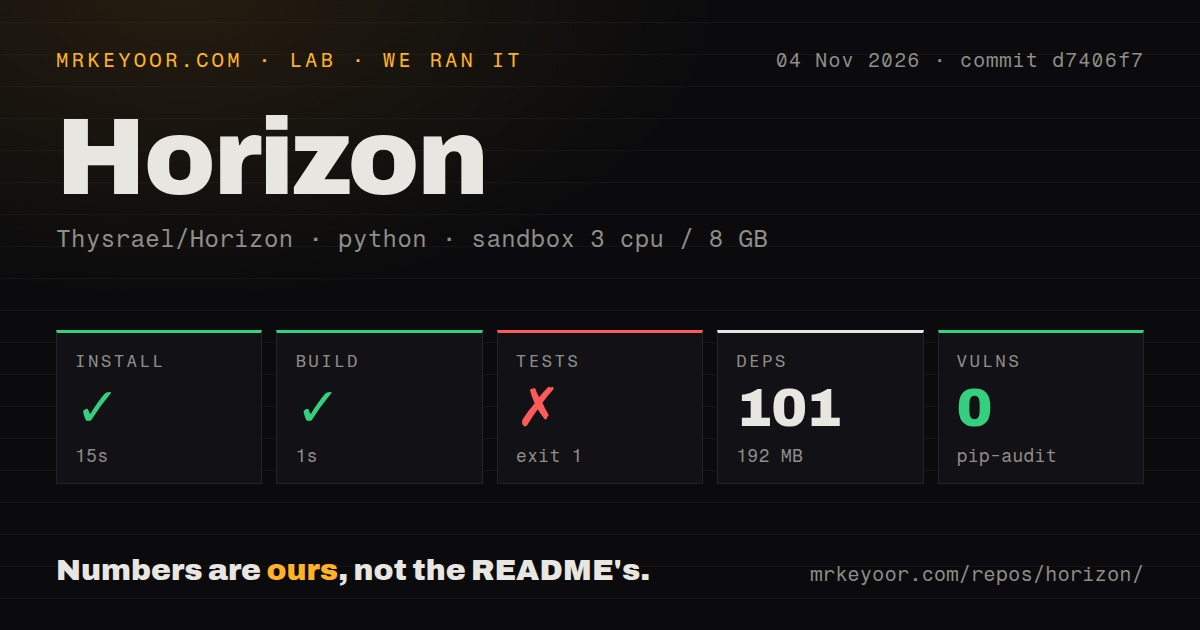
The sandbox installed Horizon in 15 seconds and completed its build step in 1 second at commit d7406f7 on November 4, 2026. The record lists 101 dependencies occupying 192 MB. The checkout contained 205 files, approximately 27,985 source lines and 8.3 MB of data.
Tests exited with code 1 after 46 seconds. The supplied tail names MiniMax model and endpoint combinations on the Anthropic route, plus an existing-image-content case for Anthropic. They report an invalid http_client argument involving httpx.AsyncClient. Several messages are truncated. No total or passing-test count was supplied.
The log shows a client argument check failing. It does not establish the underlying dependency cause, a repair or whether another provider route works. Installation and build success leave live collection, model output and delivery unverified. The record contains no end-to-end briefing or selection-quality measurement.
pip-audit reported 0 known vulnerabilities. Its coverage was 100 scanned packages and one skipped package, so the result does not cover every recorded dependency. The scan also detected one CI workflow file, a Dockerfile, a Compose file and a tests directory. Those files do not establish a working deployment.
The recorded sandbox configuration was 3 CPUs and 8 GB RAM with image ghcr.io/astral-sh/uv:python3.12-bookworm. Actual runtime and operating-system versions require raw toolchain logs.
Keep personal settings separate from reusable profiles
The configuration guide separates runtime settings from processing profiles. Sources, model settings, thresholds and delivery preferences belong in runtime configuration. Profiles hold reusable analysis and enrichment instructions.
Start with an explicit source-to-profile assignment and retain the original input while adjusting the threshold. Add automatic routing after evaluating a fixed route. This gives you fewer decisions to inspect when an article is missing or receives an unsuitable explanation.
Configuration paths and state paths have different effects. Changing the data directory moves summaries, subscribers and the default configuration location. Choosing an explicit configuration file alone leaves the state directory unchanged. Use consistent paths across scheduled commands so generation and delivery refer to the intended files.
Check optional sources before scheduling delivery
The README says the optional Twitter extra needs a Playwright browser and system packages absent from the current Dockerfile. Check the requirements of the sources you intend to use, even when deploying with Docker.
The daily GitHub Actions template is disabled until configured and renamed. Generate and inspect local Markdown before scheduling delivery. Check article selection, explanations and source links, then configure the destination you need.
The agent skill guide describes assistant support, including Claude Code and Codex. Horizon continues to use its own configured model and credentials for the AI pipeline. Installing the skill alone does not install and configure Horizon or verify provider connectivity.
Consider a feed reader for manual selection
FreshRSS is a self-hosted RSS feed aggregator with multiple users and an API for mobile clients. Consider it when you want to read and organize feeds across users or clients.
Miniflux organizes articles using categories and bookmarks and provides full-text search powered by Postgres. Consider it when you want to choose articles yourself and search the feed archive. Neither alternative was installed or benchmarked in this sandbox.
The supplied repository metadata records Horizon's last push on November 3, 2026. The latest-release lookup returned no release value; its cause is unverified. Neither observation establishes support quality or production reliability.
Documentation receives 4/5 under this review's rubric: 1 means absent guidance, 2 a sketch, 3 a usable path, 4 detailed task-specific instructions, and 5 independently verified coverage of those instructions. The supplied configuration and profile guides support 4 through their explanations of routing, thresholds, paths and output blocks. Their complete operating paths were not verified.
Setup ease, community support and production maturity remain unassessed within the limits below. Before scheduling delivery, verify the provider route you intend to use and inspect both included and rejected articles from a sample briefing.