Version 0.6 turns GPUI components into a layered desktop toolkit
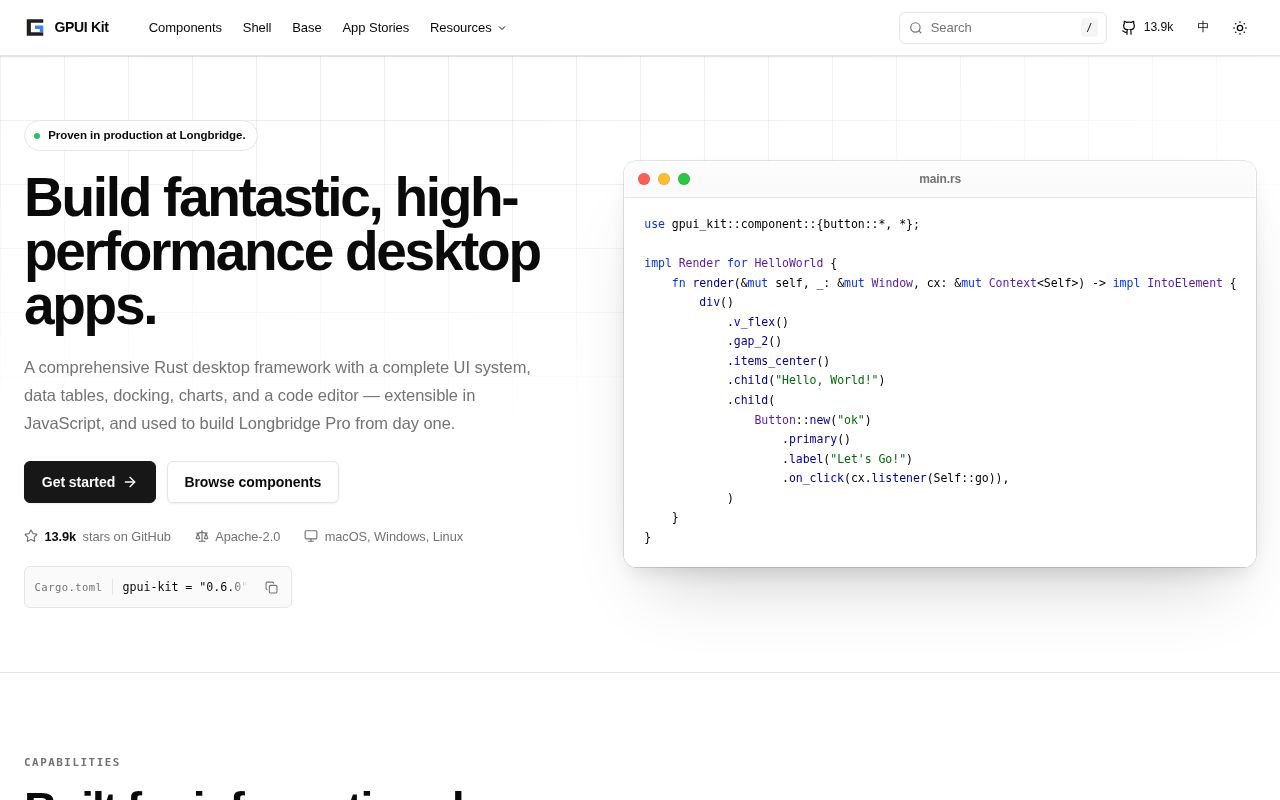
GPUI Kit 0.6 gives Rust applications a single facade over GPUI, an unstyled foundation, and a finished component library. The default package includes the styled layer and Lucide assets, while Cargo features let an application leave them out. The README covers data tables, virtual lists, rich text, charts, docking, a code editor, menus, dialogs, and a JavaScript host. Longbridge says the library grew out of its shipped Pro desktop application.
More than 60 documented components sit in gpui-component, while gpui-base carries behavior and state for teams creating their own visual system. The split is useful because product code can start with supplied styling and drop lower when a control needs a different presentation. gpui-shell adds another option: a Rust application can expose selected capabilities to JavaScript extensions after release. That makes sense for an extensible desktop product, though the host still has to decide which capabilities each script receives.
What happened when we ran it
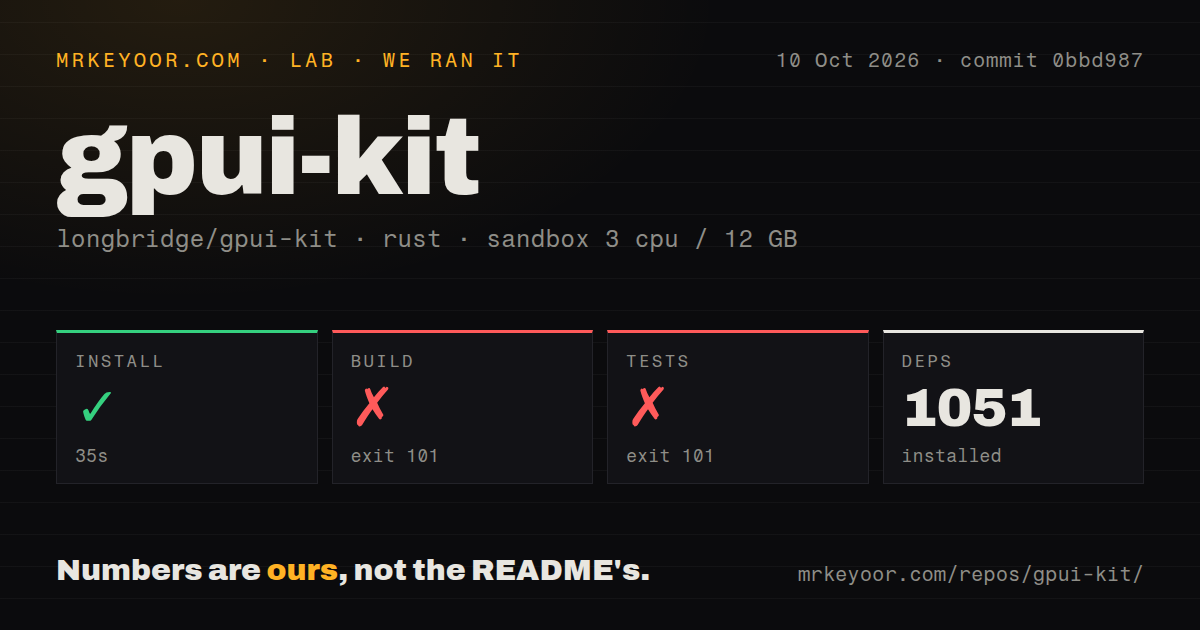
Our run at commit 2ffa97d installed 1,018 packages in 45 seconds inside a fresh Debian container with 3 CPUs and 12 GB of RAM. The repository itself contained 1,591 files, about 306,215 lines of source, and occupied 18.8 MB before installation. Dependency installation succeeded. A root build then ran for 548 seconds and exited with code 101 while compiling the default gallery application.
The test command failed with the same exit code after 136 seconds. Both log tails name the same linker result: rust-lld could not find -lxkbcommon-x11, so gpui-component-story did not compile as either a binary or a test library. The logs do not show a Rust source error or a failed assertion, and they do not prove what would happen after the library is installed. They establish that the supplied checkout did not build or test successfully in our stated sandbox.
Linux needs 12 native packages before Cargo can finish
The Linux installer lists 12 packages, including compilers plus Fontconfig, Wayland, WebKitGTK, X11, OpenSSL, Zstandard, and Vulkan pieces. One of them is libxkbcommon-x11-dev, which supplies the library missing from our linker run. The installation page tells Linux users to run the bootstrap script, although the README's short development section goes straight to cargo run. On a workstation the script is the real first step, and it uses sudo to modify the host.
Rust 1.90 is the documented minimum, with macOS 15 and Windows 10 as the platform floors. No account, API key, database, or remote service is needed for the basic gallery. The root workspace defaults to crates/story, so building the checkout exercises the large gallery rather than the small hello-world consumer shown in the README. Teams evaluating compile cost should create that consumer after installing native packages, then enable only the component features and Tree-sitter grammars their product needs.
Release 0.6.0 expands the kit and charges an upgrade cost
Release 0.6.0, published September 3, 2026, changes several public concepts at once. Single-line input, multiline text, and code editing now use separate state types. The old stateful Table is called DataTable; WebView support moved into gpui-wry; dock construction was redesigned; and history was split between navigation and undo. Those changes are explained with migration examples, but an application built against 0.5 should budget source edits rather than treating the update as a version bump.
The facade pins matching GPUI packages in the 0.3 family, which spares an application from selecting several compatible crates by hand. The contributor guide also explains that these gpui-pre packages are snapshots published from Zed, and compatible caret requirements can accept later 0.3.x updates during cargo update. Lockfiles and release testing matter here. GPUI Kit reduces dependency coordination inside one release, while the upstream snapshot relationship still deserves attention during upgrades.
Two open input issues matter for keyboard and Windows users
Open issue 2838 says the base Tabs control has pointer activation and accessibility roles but does not take part in keyboard focus. The missing list includes arrow keys, Home and End, Enter or Space activation, disabled-tab skipping, and stable focus after rerenders. That is a concrete gap for software with a keyboard-accessibility bar. Applications can choose another navigation control or implement the missing behavior, but they should not assume the supplied tabs already meet a complete desktop tab pattern.
Open issue 2877 describes a different input failure on Windows: CRLF text pasted from VS Code can leave the first N minus 1 lines visually blank while the underlying text remains present. The report includes a normalization workaround for application code. It may not affect every clipboard source, and the open report does not establish the behavior of future releases. A Windows product using EditorState should add a paste regression test before choosing the component for a release-critical editor.
September activity is high, while the decision stays product-specific
GitHub recorded a push on September 4, 2026, one day after v0.6.0, with 13,955 stars, 74 open issues, and 19 open pull requests. The 93-item repository count combines issues and pull requests, so it should not be read as 93 bugs. Our scan also found 5 CI workflow files. The main workflow runs tests on macOS, Ubuntu, and Windows after the system bootstrap, which is the right target matrix for the project's stated desktop support.
GPUI Kit is easiest to justify when a Rust desktop team would otherwise build tables, docking, editing, and theming itself. The 548-second failed build makes a casual evaluation expensive, even though the missing library has a documented installer path. Iced is a better comparison for a message-driven application, egui for immediate-mode tools or web output, and Slint for a declarative interface shared across languages. Choose GPUI Kit for its specific desktop parts, then test those parts on all 3 supported operating systems.