A 1,694 MB checkout manages agents through Git worktrees
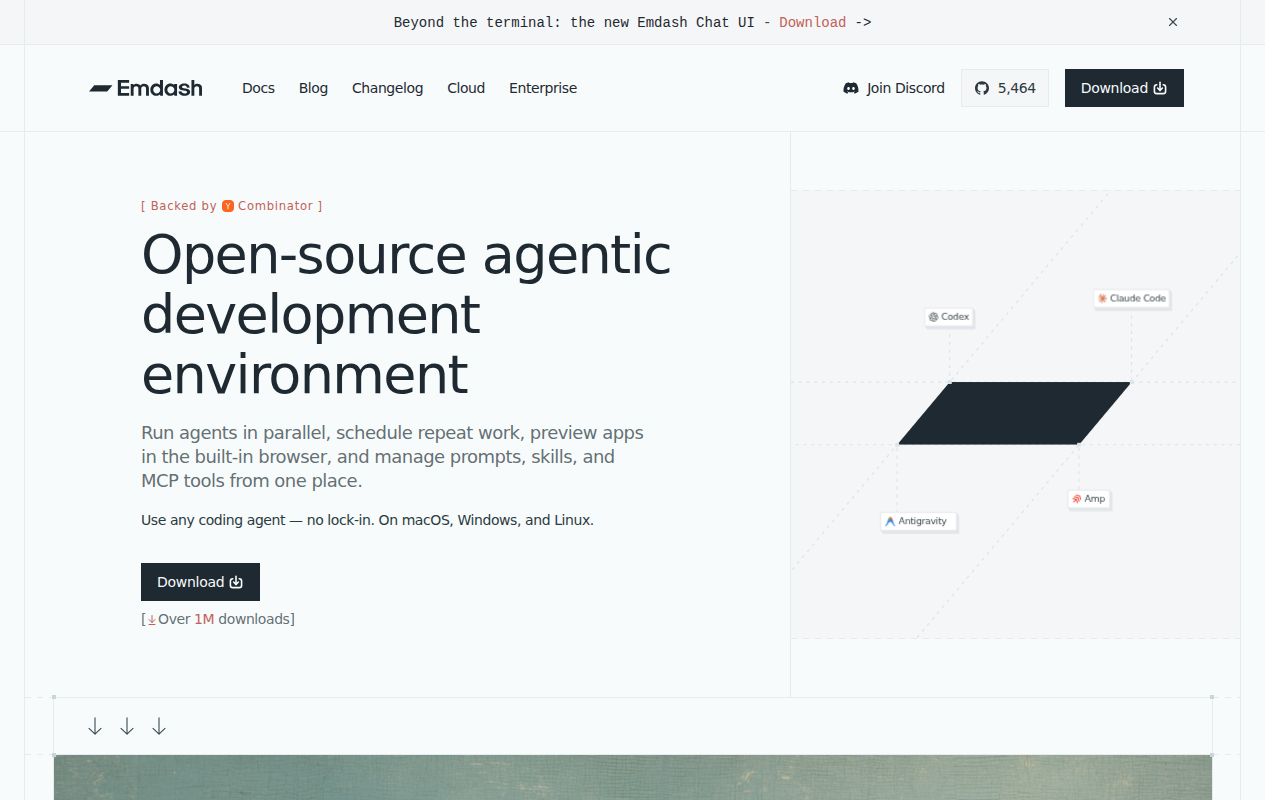
Emdash is a desktop control room for coding agents you already use. Create a task and it creates a Git worktree plus branch, launches the selected agent there, and keeps its terminal and changes separate from other tasks. The same interface can show diffs, open pull requests, inspect CI, and merge the result. Issue trackers including GitHub, Linear, Jira, Asana, and GitLab can supply work, which reduces the copying needed to turn a ticket into an agent prompt.
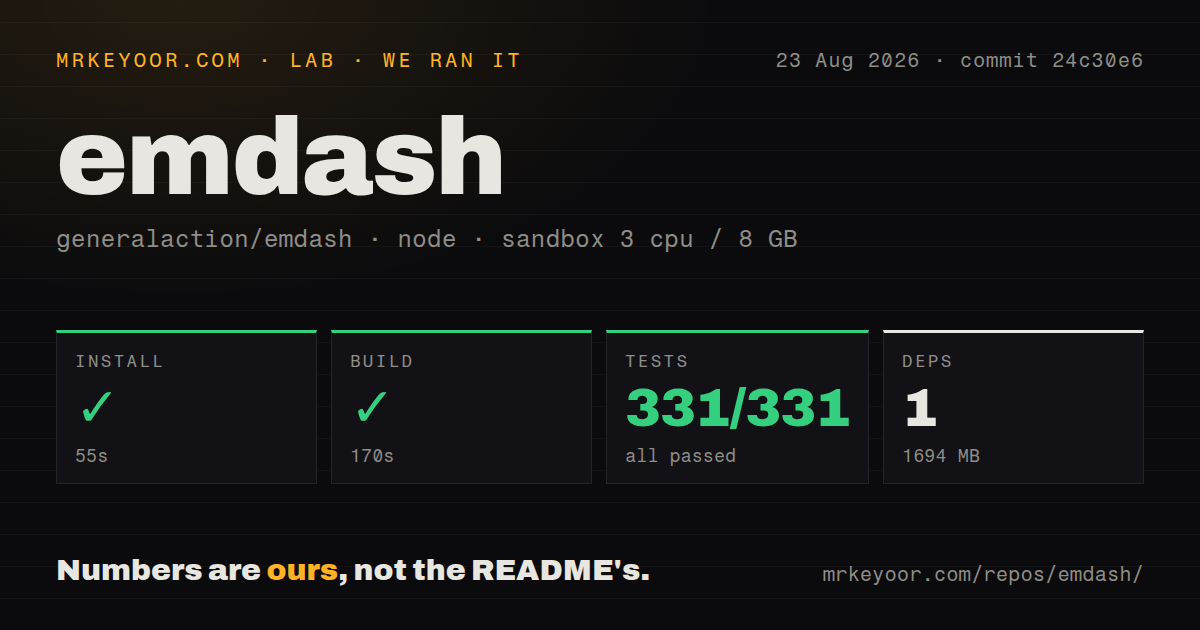
The source tree is substantial. Our checkout contained 4,887 files and about 497,806 lines of source before installation, then pnpm occupied 1,694 MB. That weight makes sense for a cross-platform Electron application with a terminal, Git integration, provider adapters, file indexing, issue connections, and remote access. It also means Emdash is a product layer, not a thin launcher script. You are trusting its worktree management and process supervision alongside the agents themselves.
Worktrees make parallel attempts reviewable
Giving every task its own worktree is the right default for parallel code generation. Two agents can pursue different fixes without rewriting the same working directory, and a reviewer can compare branches before merging either one. Emdash does not replace the provider CLI; it detects tools such as Claude Code, Codex, OpenCode, Amp, Devin, and GitHub Copilot, then displays their sessions inside one task-oriented application.
Worktree count is also the sharpest reported scaling limit. Open issue 2987 describes Emdash v1.1.40 on a repository with 190 worktrees. The reporter observed roughly 250 concurrent git worktree list processes during refresh and a peak load average above 226 on an 18-core Mac. That is an extreme repository, yet it represents the behavior Emdash encourages over time. Archive and remove old worktrees, then monitor process bursts as the task list grows.
What happened when we ran it
Our sandbox installed the pnpm workspace in 55 seconds. The harness reported 1 package installed, while the resulting dependency tree took 1,694 MB on disk. Building commit 24c30e6 succeeded in 170 seconds inside an unprivileged Node 22 container with 3 CPUs, 8 GB of RAM, and no secrets. The monorepo contained 5 CI workflow files and no root Dockerfile or tests directory.
The test command ran for 500 seconds and returned exit code 1. Vitest itself reported 331 passed and 0 failed, and the visible integration-test lines were passing. Nx still said that the test target for 9 projects had failed and named @emdash/core:test as the failed task. The supplied log tail does not contain the earlier error that caused that task to fail, so 331 green assertions cannot turn the overall command into a pass or support a guess about the cause.
Remote development has specific open failures
SSH support is more than a checkbox here. Emdash can open a remote repository, create tasks, browse files over SFTP, and run agents on the remote machine while keeping credentials in the local OS keychain. That gives a laptop access to a larger build host without moving the whole repository. It also adds path translation, session lifetime, network permissions, authentication, and remote scanning to every task.
Several current reports land on those boundaries. Issue 2962 says native Codex chat in an SSH task passed a remote path as the local macOS working directory and failed before starting. Issue 2896 reports that a saved password worked in the connection test on Windows 11 but was unavailable when opening the repository. Issue 2853 measured about 6,000 process forks per second on an 8-core remote host with 17 workspaces, caused by repeated file scans and external stat calls.
Local privacy does not cover provider traffic
Emdash stores application state in a local SQLite database and says it does not send code or chats to Emdash servers. Telemetry is optional and can be disabled in settings or with an environment variable. That is a useful separation: a disabled Emdash telemetry switch controls Emdash data, while the chosen agent still follows its own provider's authentication, retention, and billing rules.
Version 1.1.40 also installs marker-tagged lifecycle hooks for agents that support them. An open Windows report says Claude Code hooks launched through Git Bash can interpret a >NUL redirect as a normal filename and leave that file untracked in the worktree. This is not a remote code claim, but it can pollute git status and enter a commit. Windows users should inspect generated agent settings and run a prompt in a disposable branch first.
August activity is faster than the release channel
GitHub recorded the last push on August 25, 2026, while the latest tagged release was v1.1.40 from July 17. The repository had 5,500 stars and 198 open issues and pull requests when fetched. Recent reports include performance traces, Windows shell details, and SSH path analysis rather than vague complaints, and maintainers continued to push code after the release. The tag date alone therefore does not indicate abandonment.
Emdash earns a place on a developer's shortlist because worktree isolation matches how parallel coding agents should be reviewed. Our 170-second build succeeded, but the final test status and open scaling reports rule out an unconditional recommendation. Try one provider, two tasks, and a local repository first. Verify cleanup, hook changes, CPU use, and diff review before connecting a crowded monorepo or a shared remote machine.