The catalog has become a team prompt application
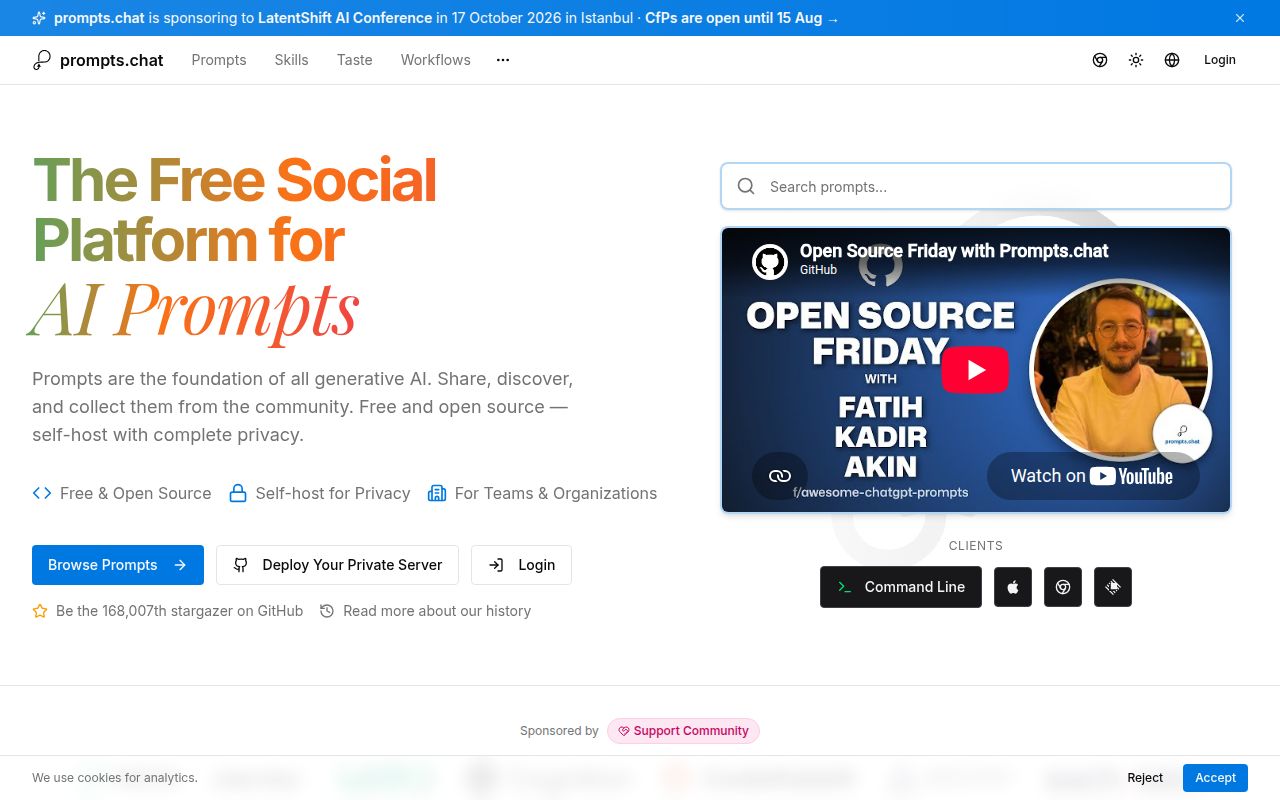
prompts.chat began as Awesome ChatGPT Prompts, and the repository still exposes the collection as Markdown, CSV, and a Hugging Face dataset. The current application goes much further. Users can browse by category or tag, submit prompts, keep entries private, vote, follow a feed, and propose changes through a versioning workflow. A separate interactive book and a children's prompting section sit in the same repository.
The self-hosted edition turns that public catalog into an internal service. Its setup guide covers custom names, logos, colors, authentication, registration, comments, private prompts, semantic search, and 16 locale choices in the wizard. Source code and site-authored material use MIT terms, while submitted prompt data is dedicated to the public domain under CC0. Teams importing the public dataset should still decide how they review prompt content before presenting it as approved internal guidance.
PostgreSQL is mandatory even before npm finishes installing
The manual guide lists cloning, npm install, the setup wizard, copying .env.example, migrations, seeding, and then the development server. The package scripts add a catch: npm install runs prisma generate through postinstall, and prisma.config.ts reads DATABASE_URL as a required value. A blank checkout therefore needs at least a database-shaped environment value earlier than the written sequence suggests.
The documented runtime is Node.js 24.x with PostgreSQL. Production also needs an explicit authentication secret. GitHub, Google, Apple, Azure AD, generic OIDC, and generic OAuth options introduce their own client credentials when enabled. AI search and generation use an OpenAI key or a compatible base URL. S3-style storage, media generation, analytics, and Sentry are optional integrations, each with more configuration and a separate data boundary.
What happened when we ran it
Our sandbox cloned commit db92786 into a fresh unprivileged container with 3 CPUs and 8 GB of RAM. The 139.6 MB checkout held 1,535 files and about 115,233 lines of source. GitHub Actions was represented by 5 workflow files, and the repository included a Compose file plus a tests directory. Our scan found no Dockerfile at the repository root.
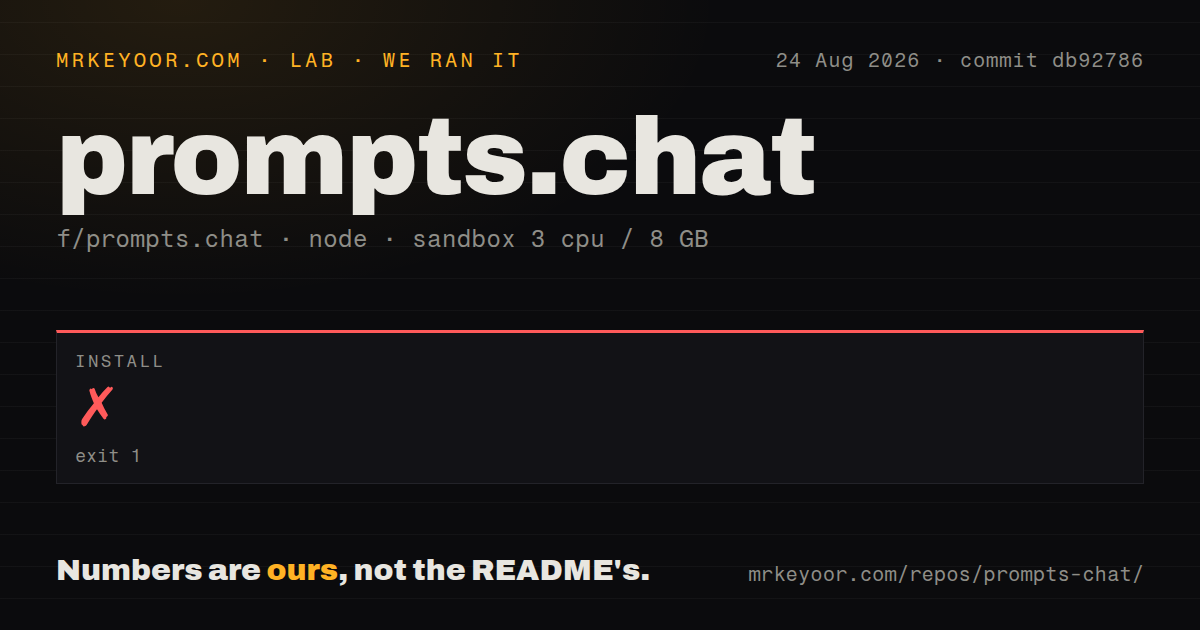
The npm install failed with exit code 1 after 164 seconds. Its postinstall command ran prisma generate, which reported PrismaConfigEnvError: Missing required environment variable: DATABASE_URL. Because installation did not complete, our harness did not proceed to build or tests. The result says nothing about whether those later steps pass once PostgreSQL configuration exists; it shows that the repository's default install has a required configuration dependency.
Compose reduces typing but does not remove database operations
The Docker guide supplies a Compose route and a prebuilt image on GitHub Container Registry. The application listens through host port 4444 in the example, and PostgreSQL data lives in a named volume. Runtime environment variables can change branding, theme, locales, registration, comments, private prompts, AI features, and MCP support without rebuilding the image. A health endpoint checks the application and database.
An operator still owns migrations, durable storage, backups, restoration drills, secret rotation, and upgrade testing. The guide provides pg_dump and psql commands, which is useful, but a command in documentation is not a backup policy. Public registration defaults to enabled in the shown container configuration. A private company deployment should review that default, its authentication providers, and API exposure before placing the service on an Internet-facing host.
MCP and Claude Code make the hosted catalog easier to use
The remote MCP endpoint lets compatible clients search and retrieve prompts without a local server. A local command can run the MCP connection through the published npm package. The Claude Code plugin adds prompt and Agent Skill search commands, plus manager agents and auto-activating lookup skills. Reading is the low-friction path; saving prompts or multi-file skills requires an API key from prompts.chat.
That integration is useful for discovery, yet it changes where prompt content enters a coding session. Teams should distinguish a community result from an organization-approved instruction and review a retrieved skill before installation. The plugin documentation lists tools that create and update skill files, so API credentials deserve narrower handling than a read-only search token. MCP support is a delivery path for the catalog, not evidence that a retrieved prompt is correct or safe for a given model.
Recent pushes matter more than the missing release page
GitHub reported 168,009 stars, 68 combined issues and pull requests, and a last push on August 26, 2026. The latest-release endpoint returned no release, so there is no published tag to use as a stability marker. The repository is clearly active from the push date; the absence of a release means self-hosters need another pinning strategy, such as a reviewed commit or immutable container digest.
For browsing, prompts.chat is easy to recommend as a large source of examples that can be copied and adapted. For a company service, its value depends on whether curation, sharing, and prompt history deserve a full authenticated application. Our 164-second failed install exposes the first operational wrinkle before the server even starts. Fix the environment order, pin the deployment, restrict registration, and test restore procedures before calling the private library ready.