The repository supplies recipes, while Ryze supplies the data plane
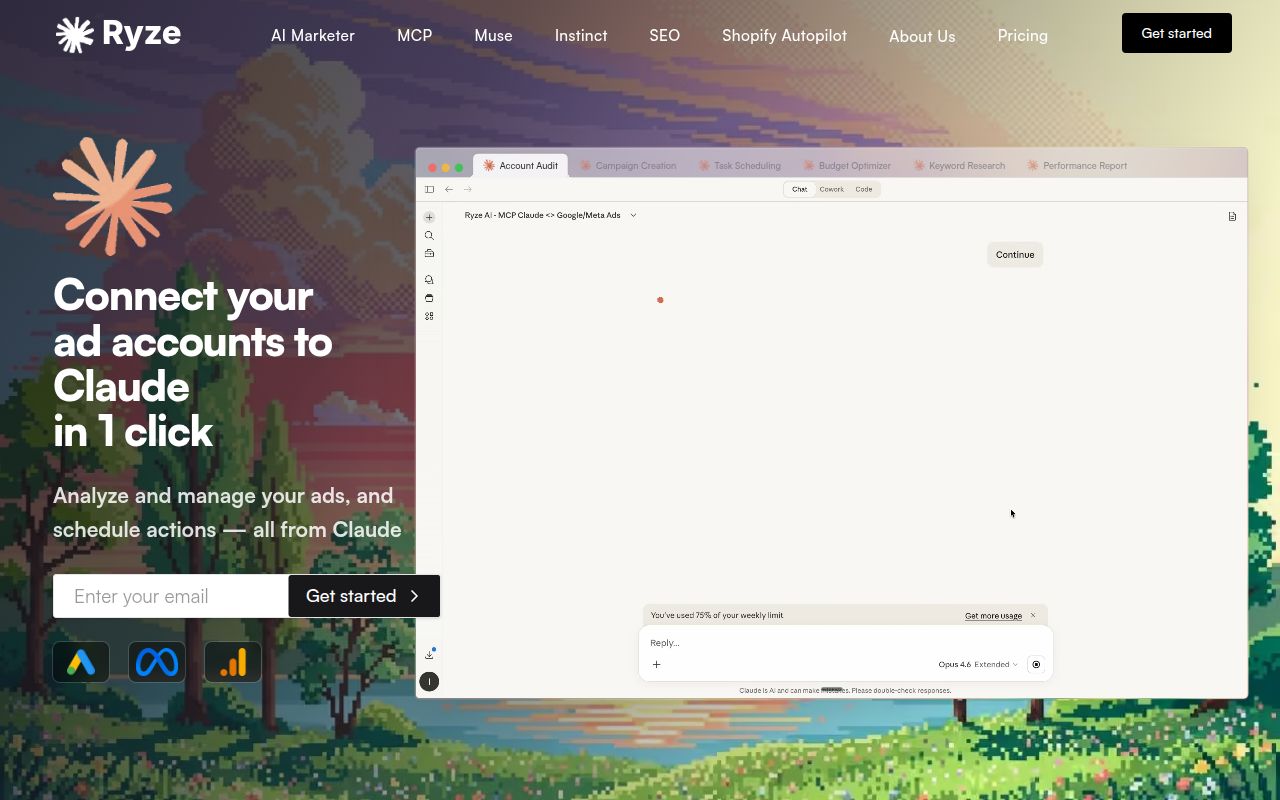
The name can leave the wrong impression. This checkout does not contain an SEO MCP server implementation. It contains eight Markdown skills, Claude plugin metadata, a small installer, and a license. Each skill tells Claude which tools to call on the Ryze MCP connector, how to combine the answers, and how to format a report. The actual Search Console, Analytics, ads, backlink, and SERP requests run through https://connector.get-ryze.ai/mcp.
That split is reasonable if you already trust Ryze. The skill files are MIT licensed, readable, and easy to change. The remote connector saves you from building OAuth flows and vendor adapters. It also means copying the repository onto your machine does not place the sensitive part of the stack under your control. The plugin's version 0.2.0 metadata registers the hosted endpoint directly, and the manual setup asks you to sign in to a Ryze workspace.
Eight skills turn raw tools into repeatable SEO jobs
The useful work is in the sequencing. The audit skill compares 90-day periods, looks for pages with a click drop above 30%, flags queries ranking at position 5 or better with CTR below 2%, and finds terms sitting between positions 8 and 20. It then inspects a short list of problem pages and cross-checks GA4 conversions. Those instructions are concrete enough to keep an agent from returning a generic SEO checklist.
Other skills cover keyword research, rank movement, competitor gaps, backlinks, content briefs, AI referrals, and overlap between paid and organic search. Each file names the expected MCP tools and includes a fallback when a specialized tool is unavailable. The benefit is consistency. A teammate can ask for an audit without remembering the provider method names, while the skill still directs Claude toward first-party GSC and GA4 records before paid estimates.
What happened when we ran it
We did not run commit 81ac50e. Our sandbox harness found a Shell repository with no supported ecosystem and no Dockerfile, so it had no approved install, build, or test route. That is an important limit on this review: we inspected the files and remote requirements, but we do not have a lab result for authentication, connector availability, tool responses, or report correctness.
The local installer is simple enough to read. It copies every directory under skills/ into the user's global Claude skills folder and asks the user to restart Claude Code. The plugin route also registers the Ryze MCP endpoint. Neither route verifies that the selected workspace exposes the required providers. The skill files acknowledge that tool availability varies and give fallbacks for some calls.
Account access is the real setup decision
A useful audit needs more than installing Markdown. The README asks the user to connect Search Console, GA4, and advertising accounts inside Ryze. Competitor and backlink work uses DataForSEO, with optional Ahrefs and Semrush connections for teams that already pay for them. The repository says the tool has no subscription and no markup on calls, but it does not turn third-party data into local data.
Review the connector's authorization scope, retention policy, workspace membership, and offboarding path before linking a production property. This matters most for the seo-vs-ads workflow because it crosses organic query data with paid search records. It also matters for agencies, where selecting the wrong property can put one client's data into another client's report. The skill does ask Claude to confirm a property when the domain is ambiguous.
GA4 referrals do not prove the wording of an AI citation
The weakest claim sits in the AI-visibility skill. It calls GA4 landing pages from ChatGPT, Perplexity, Gemini, Claude, and Copilot the pages those engines cited. A referral session proves that a visitor arrived from an AI service. It does not preserve the answer text, prompt, link placement, or even whether the link appeared as a formal citation. The workflow can identify pages that received AI referral traffic, which is still useful.
The distinction changes the report. You can say that 1 page received visits from a named referrer during a date range. You cannot reconstruct the answer or measure unclicked mentions from GA4 alone. Teams buying GEO monitoring for share of voice or prompt-level citations need another collection method. This skill is better understood as AI referral analysis with sensible follow-up checks on successful landing pages.
September activity is encouraging, but the history is short
GitHub showed 2,922 stars, 1 open issue, and a last push on September 24, 2026. The repository was created on August 29, 2026, and the latest-release endpoint returned no release. A recent push and public feedback issue show current attention. They do not establish how connector changes, Google API revisions, or provider tool renames will be handled over a longer period.
Use the pack if the hosted boundary is acceptable and you want opinionated Claude workflows over real account data. Read the eight files first, remove thresholds that do not fit your site, and describe AI landing pages as referral evidence. If you need a local server, local credentials, or prompt-level citation records, choose a narrower project whose runtime and evidence match that requirement.