326 packages buy a large Claude Code control layer
Our clean npm install pulled 326 packages and occupied 326 MB, which tells you more about oh-my-claudecode than the slogan does. This is a substantial TypeScript runtime wrapped around Claude Code. It installs skills, agents, hooks, commands, session tracking, and a terminal CLI. The appeal is concentration: one project supplies planning, execution, review, team coordination, and recovery conventions that a heavy Claude Code user might otherwise assemble by hand. The cost is that OMC becomes part of how your coding session starts, delegates work, records state, and decides that a task is done.
The command matrix in the README is essential reading because the product has two surfaces. omc setup, omc ask, and omc team are terminal commands from the npm package. /autopilot, /execute, /team, and /deep-interview run inside Claude Code. The two team commands even use different runtimes: one launches tmux processes, while the other uses Claude Code's native team workflow. Developers who assume every example works in either place will hit avoidable confusion.
What happened when we ran it
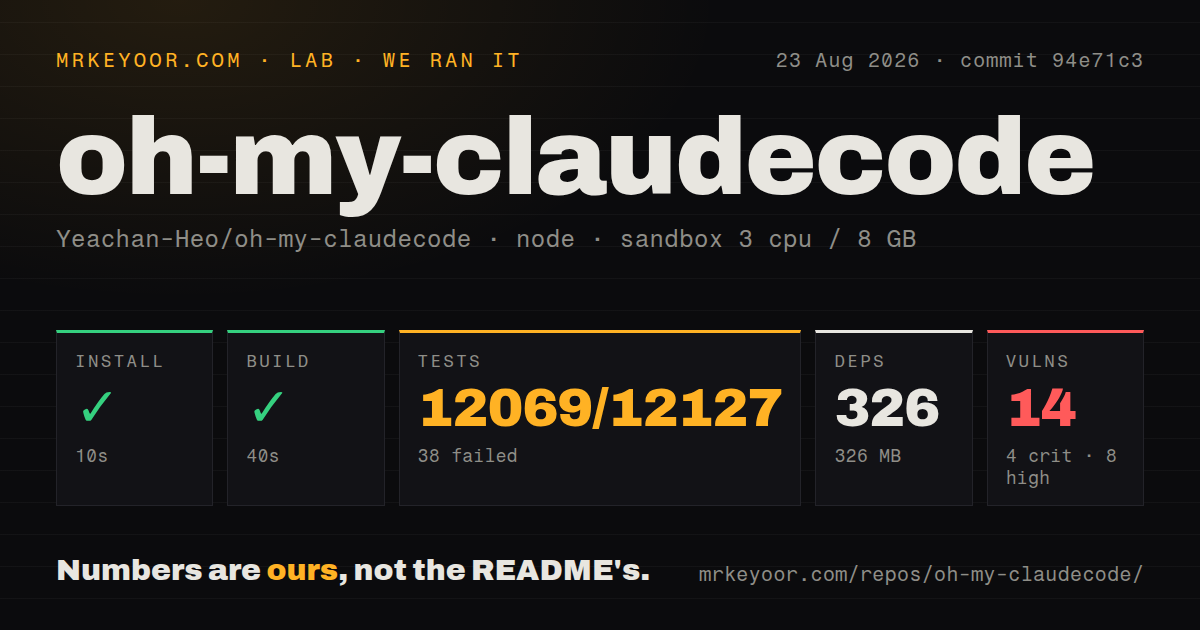
In our 3 CPU, 8 GB sandbox, installation succeeded in 10 seconds, placed 326 packages on disk, and consumed 326 MB. The build also succeeded in 40 seconds. Those results make a source checkout practical to inspect and compile, even though the repository is large: the measured clone contained 1,691 files and about 507,445 lines of source. There was no Dockerfile to define an alternate environment, but the repository did include 8 CI workflow files and a tests directory.
The test result is the reason for caution. Vitest ran for 769 seconds and reported 12,069 passing tests, 38 failures, and 20 skips out of 12,127. The tail names a session-end worker test involving fake timers, then summarizes 22 failed test files out of 655; it does not establish why those failures occurred. npm audit separately found 14 known vulnerabilities: 4 critical, 8 high, 1 moderate, and 1 low. A passing build does not cancel either finding.
Claude Code and tmux define who can use it
The project requires Claude Code plus a Claude subscription or Anthropic API key. Its most distinctive terminal feature, omc team, also expects tmux and authenticated provider CLIs for whichever workers you select. The README documents 6 provider choices for that command, including Claude, Codex, Gemini, Antigravity, Grok, and Cursor. OMC can work without those optional providers, but its cross-tool orchestration pitch gets narrower when only Claude Code is installed.
Platform details matter because some modes depend on terminal process control. The README directs macOS and Linux users to tmux, Windows users to psmux, and WSL2 users to tmux inside Linux. Named autopilot stage profiles add another hard boundary: v1 requires Linux and the flock utility. These limits are documented, which is better than discovering them after setup, but mixed operating-system teams should choose a small shared feature set before putting OMC commands into project instructions.
Version 5.0.0 makes upgrades a migration task
The August 24, 2026 v5.0.0 release removed 17 legacy workflow and command names, including ultrawork, swarm, pipeline, and mcp-setup. The release provides replacements and a migration table, so the break is deliberate and documented. Even so, prompt files, team habits, and internal guides that name old commands need edits. For an individual experiment that is manageable. A team-wide install should pin a version and assign ownership for migrations.
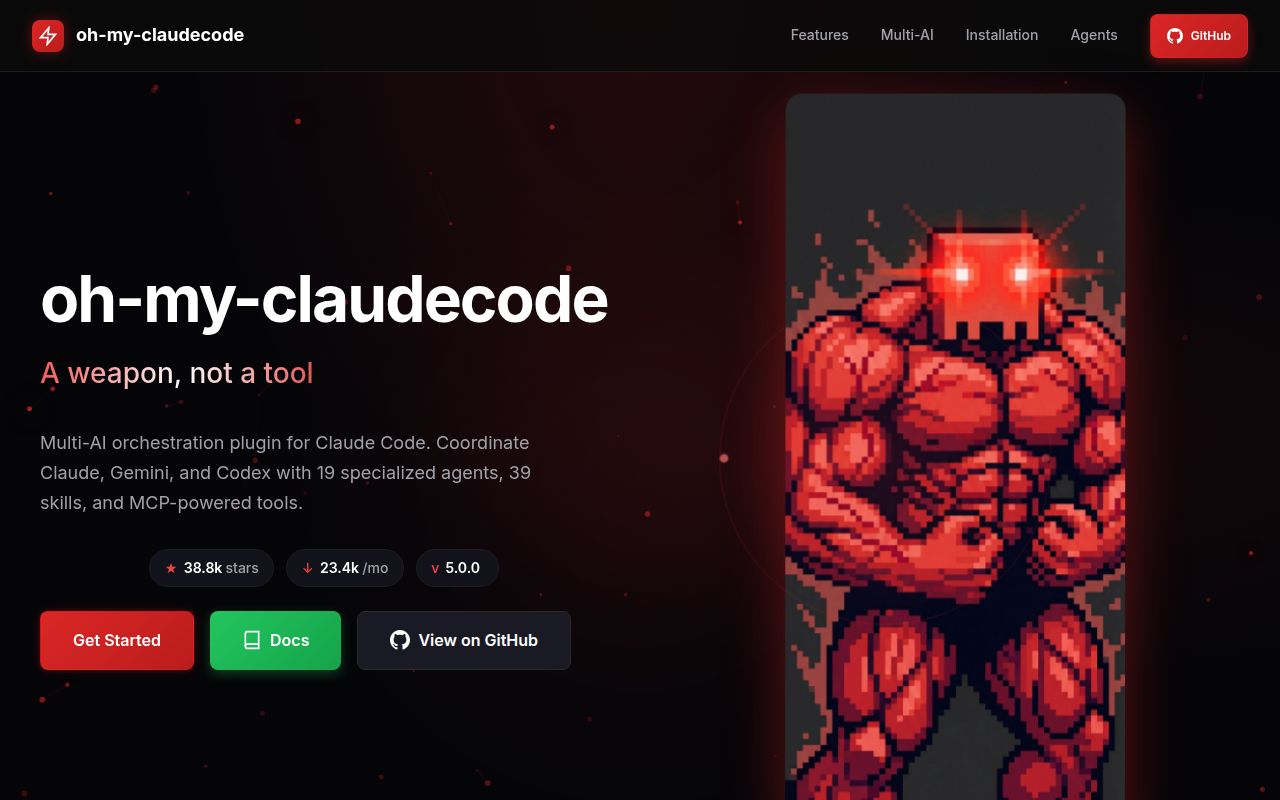
Health signals are unusually strong for a project moving this quickly. GitHub showed 38,796 stars, a last push on August 25, 2026, and 5 open issues and pull requests combined. The latest release landed one day earlier. That activity argues against abandonment, while the major release's large change list shows why maturity cannot be inferred from popularity. Rapid maintenance can close bugs quickly and still create upgrade work for users whose workflows depend on exact command names.
Local state and hooks deserve a security review
OMC writes plans, session data, logs, handoffs, research notes, and replay artifacts under .omc/. The README warns that these local files may contain prompts, transcripts, and machine-specific paths, while allowing selected project skills to be committed. That boundary is useful only if a team's ignore rules and review habits preserve it. A stray artifact from a 507,445-line checkout is easy to overlook, especially when several worktrees share a parent state root.
The tool also sits close to command execution. Team modes launch real provider processes, notifications can call remote webhooks, and hooks react to session events. None of that is automatically disqualifying, and the 8 CI workflow files show serious engineering attention. The 14 audit findings and 38 failed tests still justify a direct inspection of configured hooks, notification targets, provider permissions, and generated state before OMC touches a sensitive repository. Start on a disposable branch with no production credentials.
The best fit is a committed Claude Code power user
OMC earns its place when a developer already uses Claude Code daily and wants repeatable orchestration instead of maintaining a private folder of prompts. The 12,069 passing tests suggest broad behavior is exercised, and the documentation explains many boundaries that similar projects hide. Superpowers is easier to reason about when structured skills are enough. Everything Claude Code is better for borrowing individual pieces, while gajae-code is the author's own answer for users who find OMC too large.
Adoption should be a controlled trial, not a global install copied from a screenshot. Install the pinned package, run the 12,127-test suite on your platform, review every failure and audit item, then inspect what setup changes in Claude Code and .omc/. If the team runtime saves more coordination than those checks cost, OMC is unusually capable. If you only want a few planning commands, 326 packages and a breaking v5 migration surface are too much machinery.