Goldie automates the capture as well as the frame
Goldie uses Argent to replay flows inside an iOS simulator or Android emulator. It captures the app, places each image in a device bezel, adds a background and headline, and can join recorded clips into a store preview. That chain is the reason to consider it. Plenty of tools decorate images you already made. Goldie tries to own the repeatable route from app state to upload-ready media.
The output is specific. Its iPhone preset makes 1320 x 2868 screenshots and an 886 x 1920 H.264 preview, while the Google Play phone preset produces 1080 x 1920 images. Apple's preview must last 15 to 30 seconds. Android preview output is intended for YouTube, so Apple's duration rule does not apply there. Those baked-in dimensions remove a tedious source of rejected uploads.
What happened when we ran it
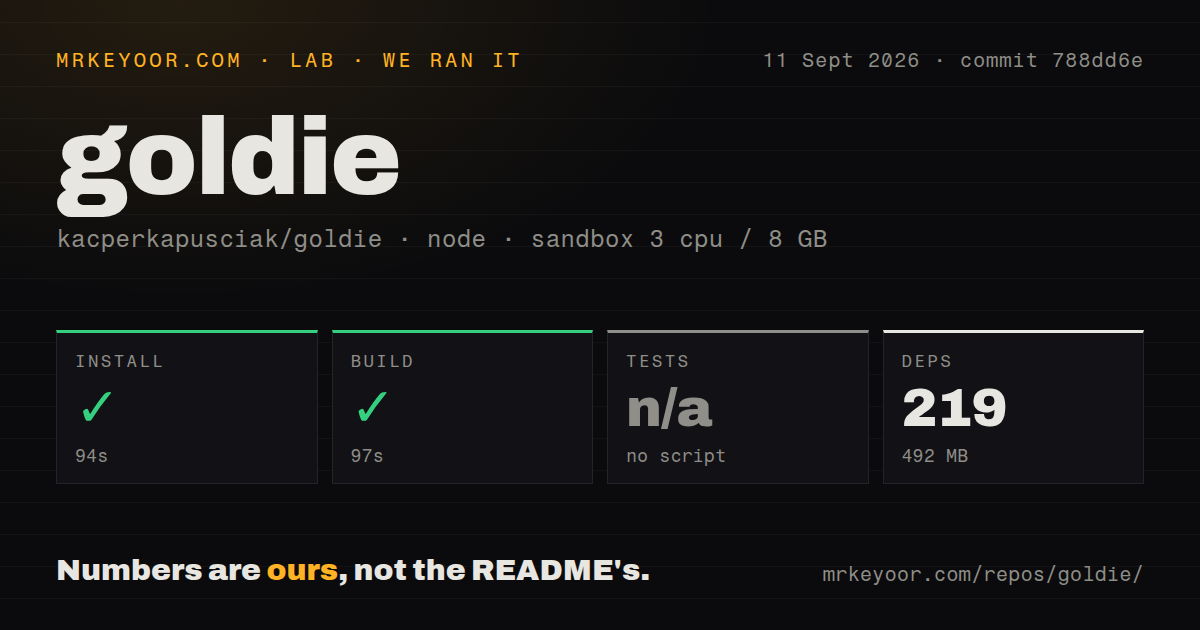
Our sandbox install finished in 94 seconds. Bun added 219 packages and the checkout occupied 492 MB after installation. The build then passed in 97 seconds. The repository itself was much smaller, with 89 files, about 7,901 lines of source, and a 19.7 MB checkout at commit 788dd6e.
There was no test script or target for the lab to call, so tests were skipped. That is different from a passing suite. The scan also found 0 CI workflow files, no Dockerfile, and no tests directory. None of those absences proves the generated screenshots are wrong. They do mean our successful compile is the strongest automated result from this run, not evidence that simulator replay or store verification worked end to end.
App Store capture still requires a Mac with Xcode
Node 20 or newer and ffmpeg are the baseline. For iPhone screenshots, Goldie requires macOS, Xcode, and an iOS simulator. Android capture works on macOS, Linux, or Windows through an emulator. Linux hosts need the extra packages named in Argent's emulator prerequisites, and a non-Mac config should keep only the Android device preset.
The Android path has its own exact requirement. Goldie expects an AVD based on the Pixel 10 Pro or Pixel 9 Pro hardware profile, both with a 1280 x 2856 screen. The configuration also needs the APK path and application ID. A running matching emulator can be reused, or Goldie can boot it. Selectors must still find the right controls on both platforms if you want one flow to serve each store.
The agent skill leaves maintainable files behind
The agent workflow begins inside the app repository. Goldie asks which stores you want, explores the app, writes Argent flows and configuration, then opens its studio. Later prompts can change the same files rather than create another disposable image. Installation instructions cover the shared skills format plus a Claude Code marketplace plugin, which makes claude-code a relevant tag rather than a marketing guess.
Automation does not make the flow permanent. The README says flows fail when the app changes and suggests repairing or rerecording them with Argent. Use release builds because debug builds can paint LogBox banners into the capture. If screenshots are produced every release or in several locales, maintaining those flows can pay back. For six images made once, the setup may take longer than manual capture.
One design file drives the studio and final render
The browser studio writes its choices to goldie.design.json, and the CLI renders from that same state. You can change devices, backgrounds, layout templates, bezels, fonts, and copy per tile. The repository includes six font families and several iPhone frame colors, while Android can use the bundled Pixel bezel or custom frame art. Decorations sit behind the device rather than forcing edits into the raw capture.
The command split is sensible: doctor checks tools and flows, all captures and renders, and studio handles visual adjustment. Finished assets land in separate screenshot and preview folders by device and locale. Verification against store rules is useful, though our 97-second build did not exercise a simulator, emulator, or upload. Treat doctor and one complete device run as the acceptance check on your own host.
September activity comes with a short track record
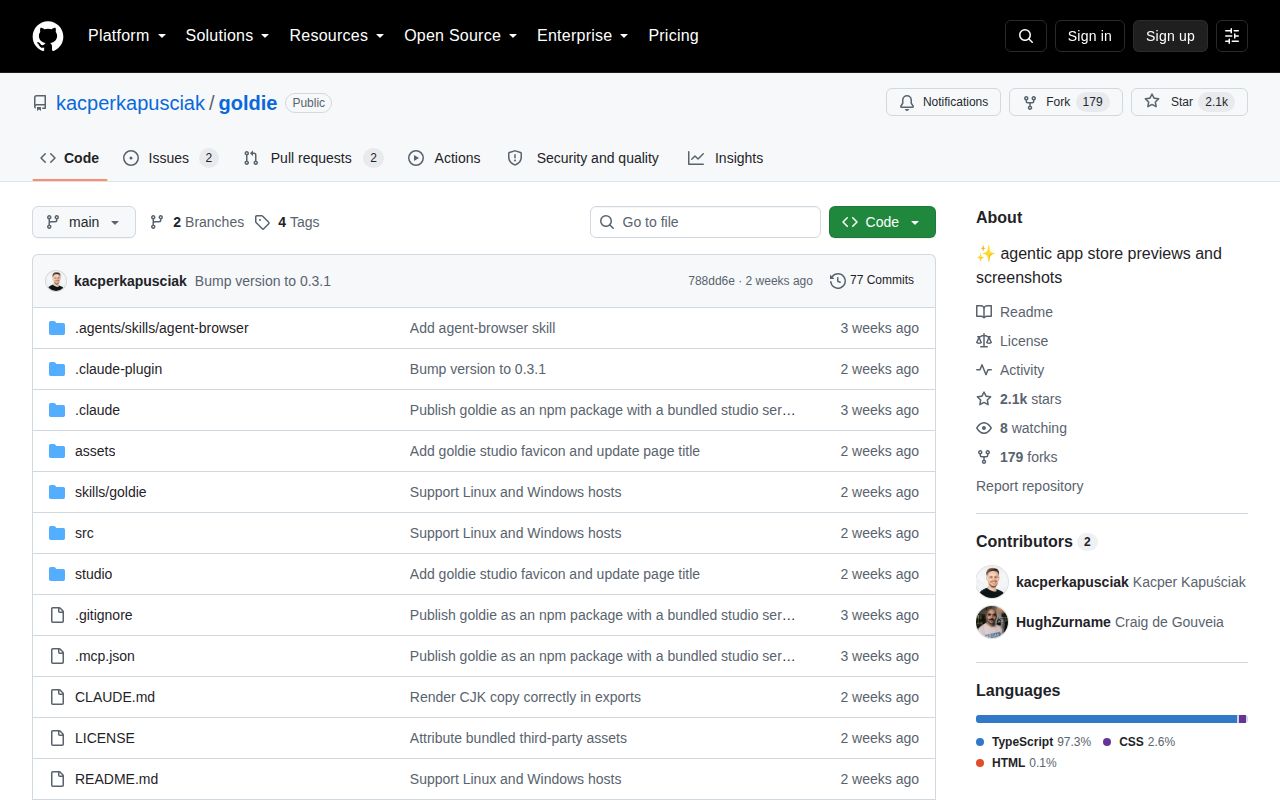
GitHub says the repository was created on August 24, 2026, and last pushed on September 2. It had 2,076 stars and 4 combined issues and pull requests when fetched. The package manifest reported version 0.3.1 and an MIT license, while GitHub's latest-release endpoint returned no published release. That describes a young project with strong early attention, not a settled release history.
Two open reports document Linux and Windows installation trouble in version 0.3.0. The current package manifest now lists macOS, Linux, and Windows, and the README explains what each host can capture. Those facts prevent us from presenting the older reports as confirmed current breakage. They still show why platform checks belong in your trial, especially outside the Mac and iOS path.
Goldie pays off when you will rerun the workflow
A 492 MB install plus simulator tooling is hard to justify for one launch graphic. The equation changes when each release needs fresh captures, several device sizes, or multiple locales. Goldie records the app journey, design choices, and output rules as files you can rerun. Its missing test target keeps it in trial territory, so make one real release build traverse every intended flow before letting the generated deck replace a manual review.