A checkout build cannot settle the published-client decision
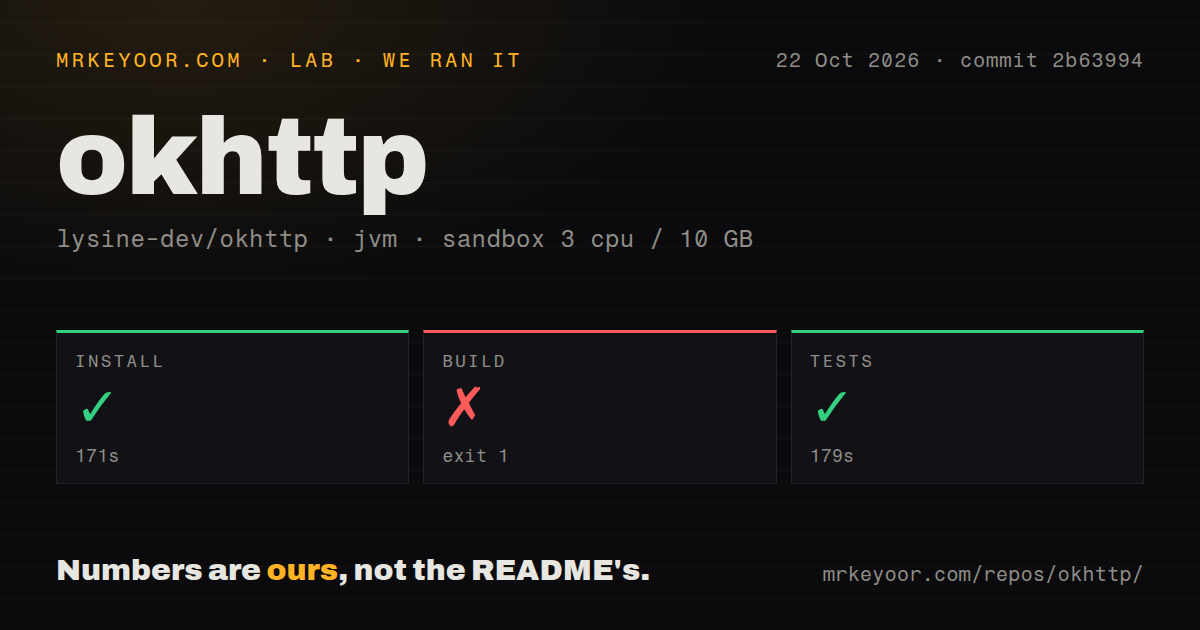
The measured repository was lysine-dev/okhttp, at commit 2b63994. Its relationship to the published com.squareup.okhttp3 distribution is unverified in the supplied evidence. Keep that provenance gap in view when using this review: the measurements describe this checkout, while the supplied README describes client capabilities and published dependencies.
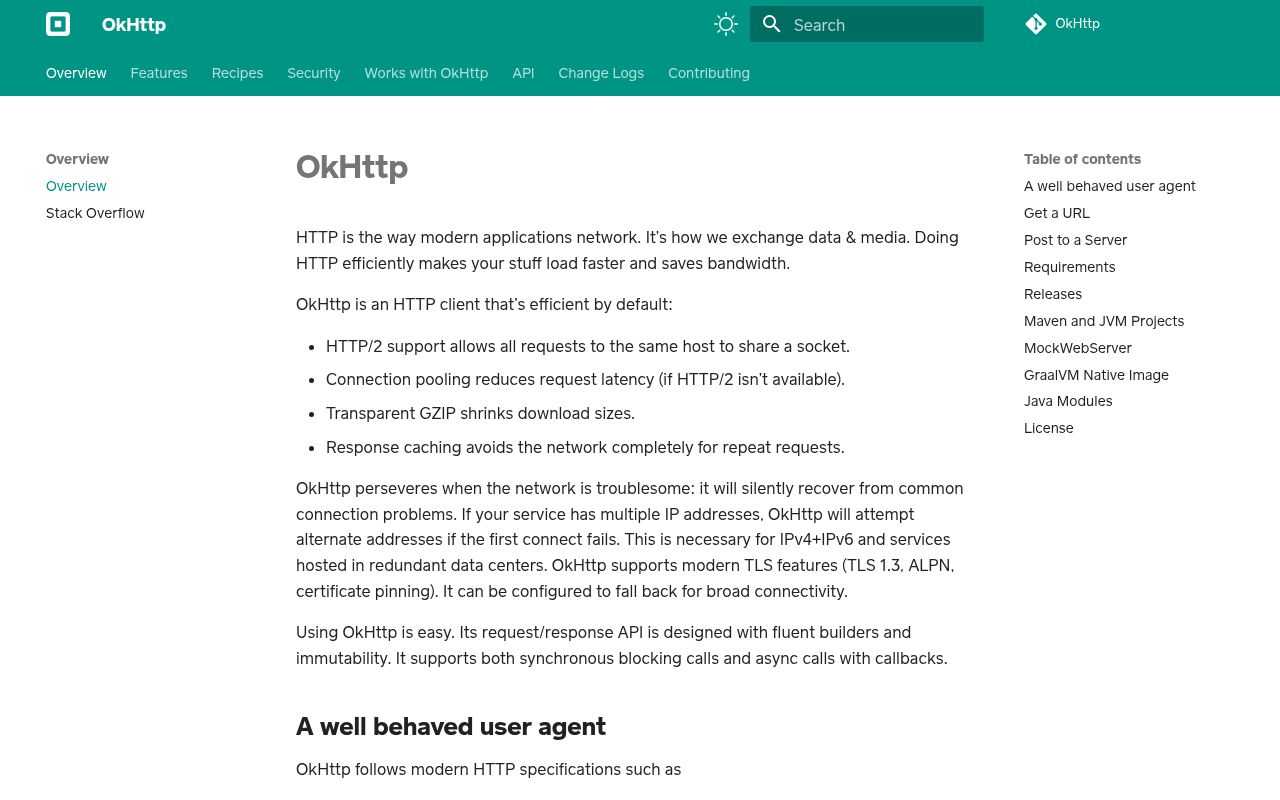
The README documents HTTP/2 socket sharing, connection pooling, response caching and alternate-IP connection attempts. It also describes synchronous calls and asynchronous callbacks. These are documented capabilities, not results of our networking tests. The supplied run contains no request-latency, throughput or recovery measurements.
What happened when we ran it
The October 22, 2026 sandbox run of lysine-dev/okhttp at commit 2b63994 completed installation in 171 seconds. The build failed with exit code 1 after 34 seconds. A separate test command succeeded in 179 seconds. The record supplies no test count or platform coverage.
The build log reported a missing Android SDK location and named ANDROID_HOME or sdk.dir in /work/repo/local.properties as configuration routes. This identifies where the attempt stopped; subsequent build behavior remains unverified. The log also reports Gradle deprecations, without enough detail to attribute them to a particular script or plugin.
The sandbox recorded 3 CPUs, 10 GB RAM and image lab-jvm:21; actual runtime and operating-system versions remain unverified. The repository scan recorded 1,328 files, roughly 146,291 source lines, a 75.8 MB checkout and three CI workflow files. It detected no Dockerfile or tests directory. That directory scan does not negate the separately recorded successful test command. No new execution accompanies this correction.
Check the documented artifact before integrating
The supplied README says Maven projects must select between okhttp-jvm and okhttp-android. The generic okhttp artifact is empty in Maven projects; Gradle handles platform selection automatically.
Its dependency examples contain differing version references: the Gradle examples use 5.5.1, while the Maven examples show BOM 5.2.0 and an explicit okhttp-jvm version of 5.1.0. Those references do not establish which dependency combination a consumer should resolve. Check the chosen release and artifact metadata together before copying a declaration. This review supplies no corrected dependency example because no consumer dependency graph was verified.
The README states Java 8+ or Android 5.0+ requirements and dependencies on Okio and the Kotlin standard library. These are documentation statements, not verification of the measured checkout's runtime or a particular published release. On Android, the README says apps disabling the AndroidX Startup initializer must call OkHttp.initialize(applicationContext) in Application.onCreate. That initialization guidance is separate from the checkout's missing SDK location.
Check request and cache constraints early
The supplied README lists two explicit limitations: GET requests cannot have a body, and the cache is not an interface with alternative implementations. If either conflicts with your application, investigate another client before integrating it.
For a consumer evaluation, begin with a small application using the intended published artifact. Check the actual service's request shape, response handling and errors. For work on lysine-dev/okhttp, first verify its relationship to the distribution you intend to modify, then configure the SDK and obtain a clean build of that checkout. Neither step has been completed by this review.
Alternatives answer different requirements
The Ktor Client engine documentation describes a multiplatform client for JVM, Android, JavaScript including WebAssembly, and Native targets. It offers default engines for multiplatform projects as well as explicit engine selection. Its OkHttp engine is based on OkHttp, so choosing Ktor with that engine retains OkHttp underneath. Evaluate Ktor when sharing client configuration across Kotlin targets is the requirement.
The Apache HttpComponents Client README states that its main module requires a Java 8-compatible runtime. It is another JVM candidate to evaluate, particularly alongside an existing Apache HttpComponents integration. The supplied evidence does not establish that it resolves OkHttp's documented request or cache restrictions. No comparative networking tests were supplied.
What the evidence supports
Documentation receives 3/5 on a rubric where 1 means essential guidance is absent, 3 means a usable documented path with material gaps, and 5 requires independently checked coverage across documented paths. The supplied README explains requests, runtime requirements and platform artifacts, but its differing Maven version references leave a dependency-selection gap. This score assesses that supplied README, not independently verified documentation for an exact published release.
Setup ease, community and maturity remain unassessed. Supplied GitHub metadata observed on October 29, 2026 reports the checkout repository's last push as 2026-10-29T03:51:30Z. A push timestamp does not establish maintainer responsiveness. Latest-release metadata and recent maintainer response activity remain unverified; the null release lookup does not prove that no release exists.
The useful next step is a consumer trial of the intended published artifact, with its provenance and dependency selection checked. The SDK failure remains a finding about the measured checkout.