Eight agent configurations move into one desktop app
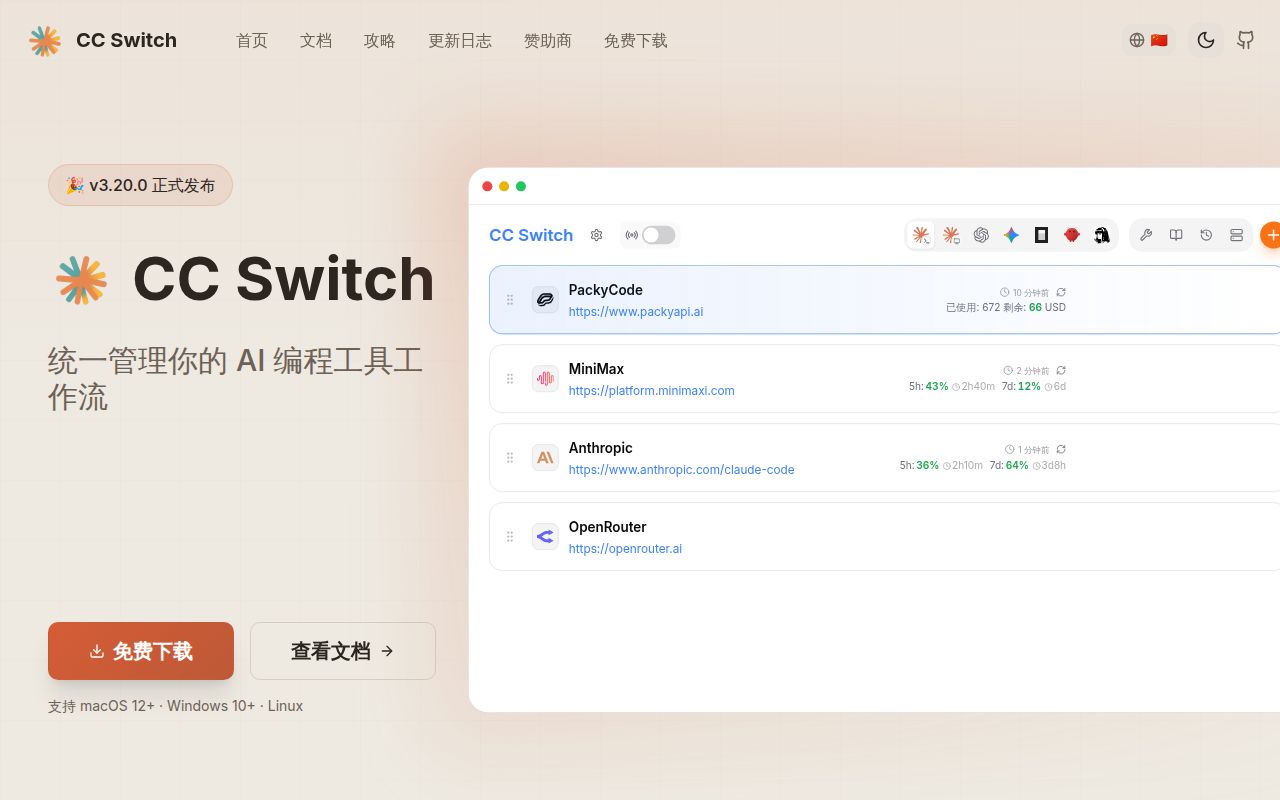
CC Switch manages provider definitions, accounts, MCP servers, skills, sessions, and selected proxy routes for 8 named AI tools. The appeal is practical: Claude Code, Codex, Gemini CLI, and their peers store similar ideas in different files and formats. A user who changes model providers often can do that from a Tauri desktop interface and system tray instead of editing JSON, TOML, and environment files by hand.
That convenience requires unusually broad local trust. The app reads and writes the live configuration used by other coding agents. It can bind accounts, start a local proxy, synchronize MCP entries, install skills, and restore sessions. The README describes atomic writes, SQLite storage, automatic backups, and cloud sync through Dropbox, OneDrive, iCloud, or WebDAV. Those controls help, but the failure mode is still a changed credential or config file used by paid developer tools.
What happened when we ran it
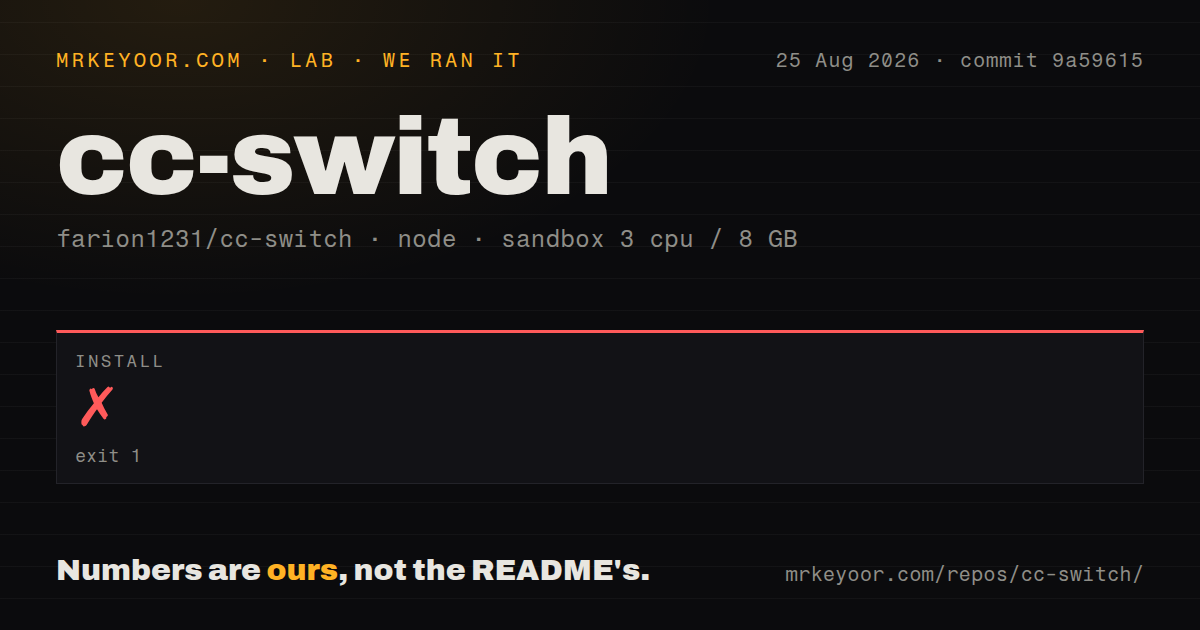
Our sandbox cloned commit 9a59615 and attempted the documented pnpm workspace install. It failed with exit code 1 after 11 seconds. The last lines repeatedly said ERR_PNPM_CONFIG_CONFLICT_BUILT_DEPENDENCIES: pnpm would not accept both neverBuiltDependencies and onlyBuiltDependencies. The log also warned that dangerouslyAllowAllBuilds was set to true and that dependencies listed in neverBuiltDependencies would run their scripts.
The install failure prevented any build or test result in our run. We will not infer whether changing one pnpm option would make the rest pass, because the log does not establish the intended policy. The useful finding is that commit 9a59615 did not install as supplied in our clean Node 22 container. A contributor needs to reconcile the workspace settings before the normal source-development path can be called repeatable.
The checkout was substantial: 1,230 files, about 327,567 source lines, and 46 MB before installation. We found 7 CI workflow files, a tests directory, and monorepo workspaces, but no Dockerfile. A desktop application does not need a container image, yet the size matters when judging how much code sits between an OAuth token and the configuration files for several agents.
Backups matter because takeover changes live files
The README says CC Switch keeps active configurations and rotates backups under ~/.cc-switch/backups/, retaining the 10 most recent. Skill uninstall also creates backups and keeps 20. Version 3.20.0 adds a database migration from v16 to v17, automatically backs up before upgrading, and warns that a downgrade requires restoring that backup. Test the documented path with disposable agent profiles before using it with accounts that carry billing or private repository access.
Two fresh issues make that advice concrete. Issue 6860 says the Codex writer removes unmanaged [model_providers.*] sections during takeover or switching, which can break old threads referring to those provider names. Issue 6871 says a Claude Code settings rewrite dropped enabledPlugins, leaving 8 installed plugins shown as disabled. Both reports concern preservation of data outside the manager's immediate view, the hardest part of owning someone else's config file.
Provider routing adds compatibility work to account switching
CC Switch goes beyond swapping keys. It can translate requests through a local proxy, map models, record usage, and fail over among providers. Release v3.20.0 added multiple ChatGPT accounts for Codex, tied each official provider card to a selected account, and routed Claude Code WebSearch through supported GPT paths. It also added Pi as another managed application and changed how several provider presets describe reasoning levels.
Each translation path can disagree with an upstream schema. Issue 6867 reports that Codex requests routed to Moonshot were rejected with HTTP 400 because the tool schema contained $ref entries with sibling keywords that Moonshot's format rejected. Issue 6815 describes another tool-schema rejection with xAI OAuth and Codex. These are specific interoperability failures. If one routed provider pays for daily work, replay its real tool calls before enabling takeover.
The sponsor directory is useful discovery, not due diligence
The English README opens with a very long sponsor section containing many API relays, referral links, discounts, credit offers, and performance claims. CC Switch also states that its only official website is ccswitch.io and warns against impostors asking for payment or login credentials. That warning is sensible, but it does not evaluate the privacy, model provenance, billing, or reliability of each listed relay.
Treat a preset as configuration, not an endorsement. Read the provider's terms, establish where prompts and code travel, cap spend, and use a restricted key for the first run. The app's ability to centralize several providers makes credential hygiene more important because one compromised desktop profile can affect multiple tools. Teams with formal vendor review may prefer approved endpoints configured directly in each agent.
Fast development brings fixes and fresh breakage together
GitHub showed 129,607 stars, 2,462 combined issues and pull requests, and a last push on August 27, 2026. Release v3.20.0 arrived on August 18. Its notes describe a WSL regression in v3.19.2 that prevented existing configurations from being updated or switched, then say v3.20.0 fixes it and adds real WSL2 CI coverage. That is responsive maintenance, paired with a pace that asks users to read every upgrade note.
CC Switch solves a real annoyance for developers who move among many agents and providers. The feature set is deeper than a tray switcher, and that is both its value and its risk. Our failed 11-second install blocks a source-level recommendation today. Binary users should begin with one disposable profile, prove backup restoration, inspect resulting files, and add important accounts only after the exact proxy and plugin paths survive that trial.