LTX Director puts a timeline inside one ComfyUI node
The main attraction is LTX Director 2.0, a custom node that behaves more like a compact video editor than a usual graph box. Its timeline can hold prompt segments, images, imported video, audio, keyframes, and IC-LoRA references. Users can trim or split clips, set in and out points, add first or last frames, save timeline state as JSON, and regenerate a selected section through Retake mode. The surrounding workflow still runs through ComfyUI and LTX.
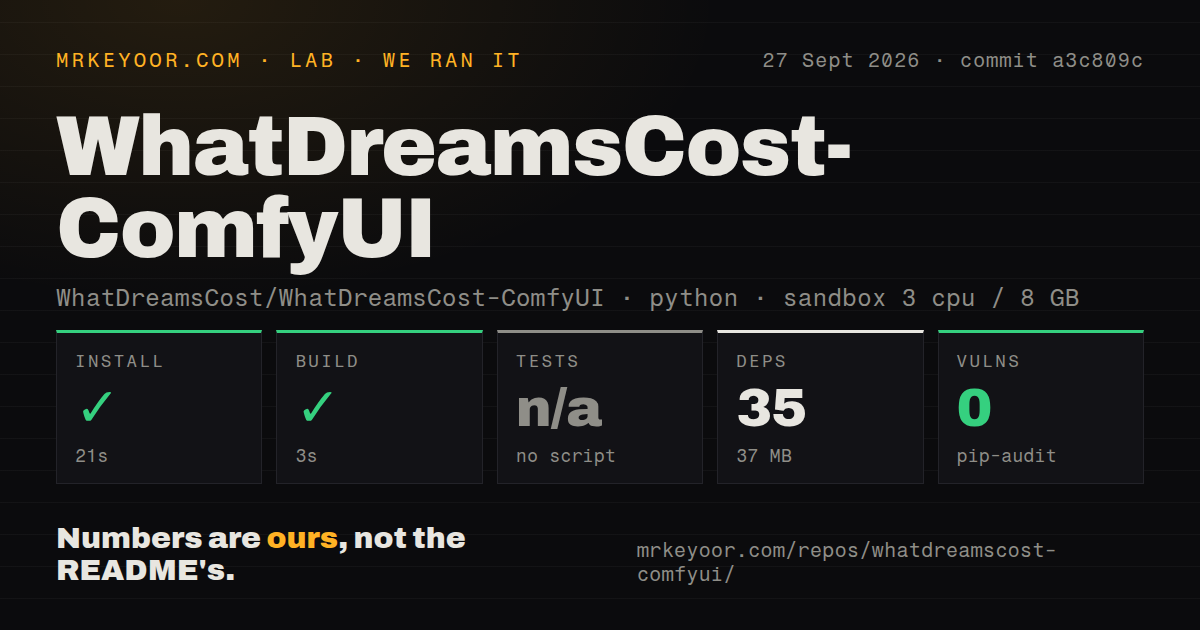
This is a small source repository compared with the models it controls. Our commit a3c809c checkout had 31 files, about 19,574 source lines, and occupied 1.5 MB. Installing its Python requirements added 33 packages and used 36 MB. Those numbers exclude ComfyUI, ComfyUI-LTXVideo, KJNodes, LTX checkpoints, LoRAs, video files, and generated output. Disk and memory planning should start with that larger stack rather than the custom-node folder.
The node reduces graph clutter but concentrates state
Director combines operations that would otherwise span many nodes: prompt relay, image-to-video, text-to-video, video extension, reference images, audio inpainting, trimming, and sequence assembly. The same repository includes a multi-image loader, older LTX sequencer and keyframer nodes, a speech-length calculator, plus video and audio loading interfaces. For hands-on experimentation, one timeline is easier to scan than a wide graph of linked widgets.
Concentrating the controls also puts more state in a custom browser interface. The README says version 2.0 includes a redesigned sidebar, prompt boxes, hotkeys, snapping, track toggles, and saved JSON. It also says full documentation will come later. The install section tells Manager users to choose a nightly version if 2.0.0 is not yet visible, and requires current ComfyUI-LTXVideo. That is a moving dependency set, not a workflow to freeze casually before a deadline.
What happened when we ran it
Our sandbox installed 33 Python packages in 22 seconds and consumed 36 MB. The build check succeeded in 23 seconds. Pip-audit found 0 known vulnerabilities in the installed packages. The repository offered no test script or target, so the harness skipped tests rather than inventing a command.
The run used Python 3.12 in an unprivileged Debian container with 3 CPUs and 8 GB of RAM. It did not start ComfyUI, download LTX models, open the timeline, generate video, or measure VRAM. The scan found 1 CI workflow file, no Dockerfile, and no tests directory. A successful 23-second build therefore says the extension package was structurally acceptable in our environment; it says nothing about generated motion, prompt adherence, audio joins, or timeline reliability.
A cache report shows repeated jobs can exhaust enormous memory
Issue #212 describes two weak-key caches whose values keep strong references back to their model keys. In the reported two-pass GGUF workflow, live CPU tensor storage rose from 29.41 GB after one run to 58.82 GB after the second. The third run was killed for running out of memory inside a 77.30 GB cgroup. Clearing two dictionaries released 29.53 GB in the reporter's inspection. Those are the issue author's measurements, separate from our lab run.
The report says the cache never hit because ComfyUI created new model objects each execution. That makes the failure especially concerning: memory was retained without saving the next load. Until a fix lands, a creator using comparable GGUF and IC-LoRA workflows should watch resident memory between prompts and restart before the process reaches its limit. Our 36 MB package result cannot predict the runtime footprint of a 22-billion-parameter video pipeline.
Workflow tabs can overwrite a shared prompt
Issue #221 was reproduced on the same a3c809c commit that our sandbox checked. Two Director nodes shared one connected string as global_prompt. Switching to another ComfyUI workflow tab and back caused a Director's stale saved prompt to overwrite the upstream source, with the last initialized node winning. A tab switch should be a viewing action; in this case it mutated workflow data.
Another report, issue #213, says the timeline sometimes returns after restart as a multiline field full of raw JSON instead of the visual editor. The workaround involved reinstalling, updating, or recreating the node. Issue #223 reports a stage-two VRAM failure on a 32 GB Nvidia card after a workflow update, though that report also changed ComfyUI and does not isolate one cause. Save timeline JSON, keep workflow copies, and test upgrades on duplicates.
The README's version history is more useful than GitHub Releases
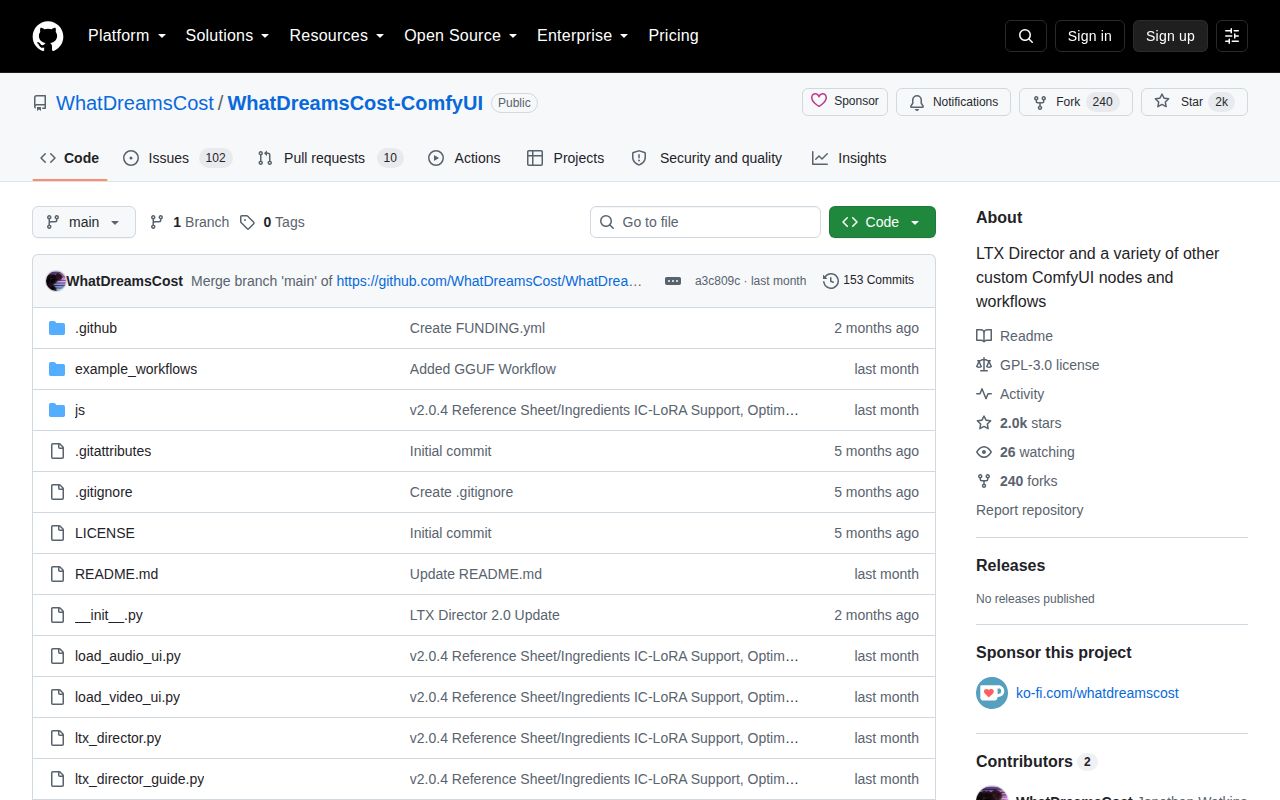
GitHub returned no latest release for this repository. The README labels its current update as 2.0.4 and documents earlier changes inline, while open reports refer to 2.0.5. GitHub showed 2,001 stars, a GPL-3.0 license, 112 combined issues and pull requests, and a last source push on July 30, 2026. Issue activity continued in August, so the absent release page alone does not mean the project is abandoned.
LTX Director solves a real usability problem for ComfyUI video creators, and our 22-second install makes evaluation inexpensive. Its weakest point is trust between runs: there is no automated test target, timeline state has current bug reports, and one detailed cache failure can consume tens of gigabytes. Use it with saved workflow copies and a memory monitor. For repeatable production, plain LTX nodes remain the safer baseline until Director's state and cache behavior settle.