Version 2.12 syncs external values into Kubernetes Secrets
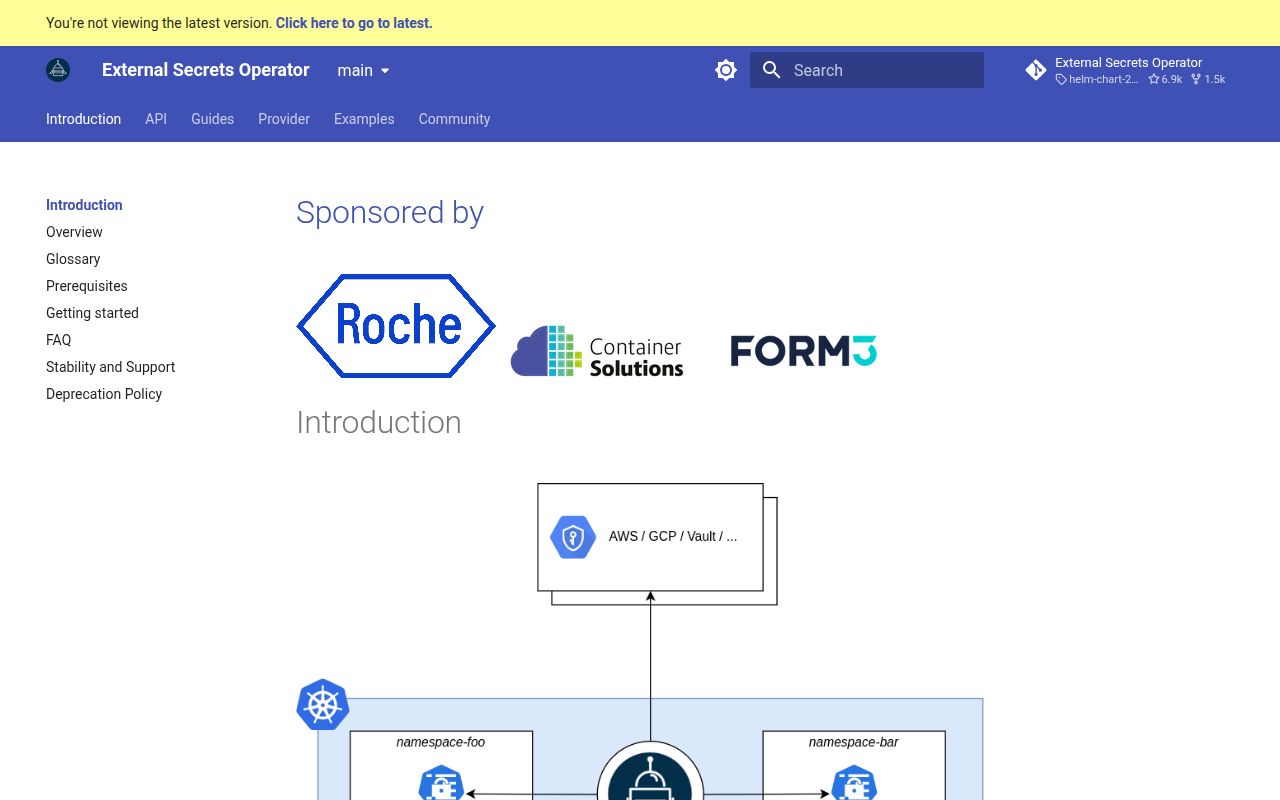
External Secrets Operator 2.12 runs inside Kubernetes and reconciles custom resources against external secret managers. An ExternalSecret names the remote values and the Kubernetes Secret to create, while a SecretStore or ClusterSecretStore defines the provider and authentication route. Applications keep using ordinary Secret references. Platform teams get one Kubernetes-facing model for AWS, Google Cloud, Azure, Vault, and many smaller providers.
That convenience changes the security boundary. ESO needs permission to read from the provider and write Secrets in the cluster. A ClusterSecretStore can widen the blast radius across namespaces if its identity or access rules are too broad. The project documents scoped RBAC, controller classes, multi-tenancy, security practices, and a threat model, but operators still have to turn those pieces into a policy that matches their namespaces and cloud accounts.
The 118-second install leads to real cluster work
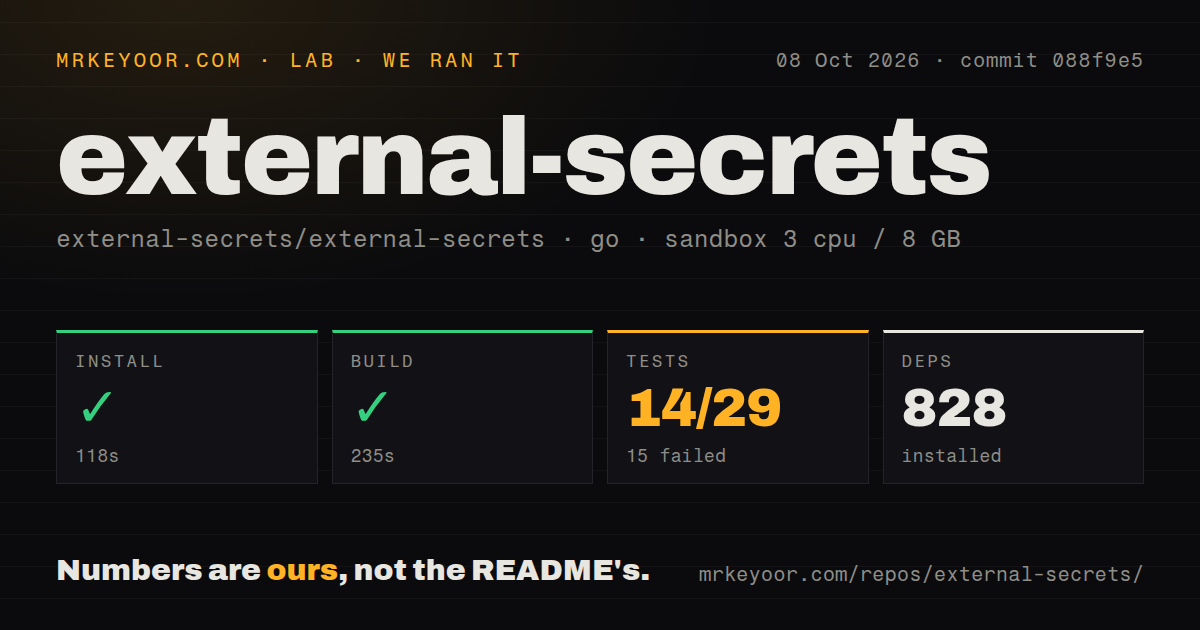
Our source install took 118 seconds and pulled 828 packages. The build then needed 235 seconds. Those numbers describe a large Go operator checkout, not the user-facing Helm installation. Chart 2.12.0 can install the controller and its CRDs in a few commands, but a useful deployment still needs provider credentials or workload identity, outbound access, Kubernetes RBAC, and at least one correctly scoped SecretStore.
The CRD bundle has reached the 256 KB limit, so the getting-started guide requires server-side apply wherever the CRDs are installed. Helm manages them by default unless installCRDs is disabled. The chart also creates a webhook and certificate controller by default, with many values for probes, metrics, security contexts, network policy, leader election, and cluster-scoped features. Review those defaults as part of the threat model rather than treating the short install command as the deployment plan.
What happened when we ran it
Our sandbox installed commit 088f9e5 in 118 seconds and built it successfully in 235 seconds. The checkout had 1,816 files, about 206,048 lines of source, and occupied 38.3 MB before installation. Our test method used an unprivileged Debian container with 3 CPUs, 8 GB of RAM, Go 1.24, and no secrets. The repository contained 27 CI workflow files, a Dockerfile, and a tests directory.
The Go test step failed after 63 seconds. Its summary reported 14 passed and 15 failed of 29. The final log lines named failures in pkg/controllers/pushsecret, pkg/controllers/secretstore, and pkg/controllers/webhookconfig; successful lines included secret-store metrics, templating, and utility controllers. The supplied tail does not contain the assertions or environment errors behind those failures, so blaming Kubernetes fixtures, missing services, or product code would be speculation.
This result is a release gate, not proof that the running operator loses secrets. It says the supplied test command at commit 088f9e5 did not complete cleanly in our fresh container, despite a successful build. A team considering 2.12 should reproduce the exact suite in its own build environment, then test provider authentication, refresh, deletion policy, upgrades, and failure recovery against a disposable cluster before touching production secrets.
Only the current 2.12 minor receives project fixes
The support page lists ESO 2.12 with Kubernetes 1.36 and says only the most current minor is supported. Version 2.11 was released September 18, 2026 and reached end of life when 2.12 shipped on October 6. The project recommends stepping through each minor and testing upgrades outside production. That cadence suits a platform team with regular cluster maintenance; it is a poor fit for organizations expecting a year of fixes on one pinned minor.
Provider support also varies. AWS Secrets Manager, AWS Parameter Store, Azure Key Vault, Google Secret Manager, and Vault are marked stable. Many other backends are alpha, and the feature table differs across remote search, metadata, referent authentication, store validation, PushSecret, and deletion behavior. Pick the provider row first. The operator's overall version does not make every integration equally mature.
The 2.12 Helm chart is explicitly not hardened
The project's support policy says its Helm charts are supplied as-is and hardened charts are not a deliverable. Version 2.12.0 defaults include non-root security contexts and a read-only root file system, which are useful starting points. NetworkPolicy is disabled, leader election is disabled, and cluster-scoped resources are available unless you choose scoped settings. Production review still belongs to the installing team.
Decide whether the operator needs cluster-wide stores, PushSecret, cluster generators, or generic targets before granting permissions. Generic targets can extend write access beyond Secrets into ConfigMaps or custom resources. Provider identities should use the narrowest viable workload mechanism, and secret refresh errors need monitoring. Open issue 6728 reports 3 broken Keeper secrets with 24-hour refresh settings contributing about 560 daily provider calls, a user report that shows why retry behavior and rate limits need testing.
Two hundred fourteen open issues reflect a wide provider surface
GitHub search counted 214 open issues on October 8, 2026, while the repository API listed 336 combined issues and pull requests. The project had pushed code on October 6, the same day chart 2.12.0 shipped. Active reports cover provider endpoints, AWS cross-account identifiers, token caching, reconciliation rates, and missing PushSecret documentation. That mix is expected in a controller spanning many cloud APIs, and it makes issue review part of choosing a provider.
ESO earns consideration when one Kubernetes resource model can replace several provider-specific controllers. Its codebase, current release activity, and provider documentation show serious maintenance. Our failed 29-package test run keeps the recommendation conditional: reproduce the failure, qualify the exact provider, and rehearse upgrades. If mounted files, Vault-only injection, or encrypted Git manifests already solve the job, the broader controller and its upgrade cadence may be unnecessary.