Your Android version decides whether LibrePods is practical
On an unsupported Android phone, getting AirPods controls can mean rooting the phone and installing Xposed before LibrePods can connect. The Android guide names exceptions: ColorOS/OxygenOS 16, realme UI 7.0, and Pixel devices on Android 16 QPR3 with the latest Google Play system update can use most features without root. Check that list before choosing a download. Someone with a supported phone faces a very different decision from someone whose employer locks down the device.
LibrePods implements Apple's private AirPods control protocol. Its documented everyday benefits include changing noise modes, reading battery status, and pausing media when you remove an earbud. Those are useful reasons to keep AirPods when switching away from an iPhone. English documentation covers Android and Linux, but the feature table assigns different capabilities to each. Owning the right earbuds doesn't guarantee that your computer or phone can expose every setting.
What happened when we ran it
We did not run LibrePods at commit 652648e: our harness did not support its Kotlin ecosystem, and the checkout had no Dockerfile. We cloned it on October 16, 2026, into an unprivileged Debian sandbox with 3 CPUs, 8 GB of RAM, and no secrets. No container image was recorded. This was a harness limitation, not a demonstrated failure in LibrePods. There is no measured installation time, build result, or test result to report.
That leaves an important gap for an AirPods companion. Our sandbox produced no evidence about pairing, ear detection reliability, or audio handoff. The recommendations here depend on documented compatibility and project activity. A reader should treat the feature table as the project's account of support and confirm the functions they need on their own hardware before depending on them during calls or daily travel.
Root still buys features that supported phones cannot unlock alone
Android 16 QPR3 support does not remove every privilege requirement. Features behind the VendorID hook always require root, according to the Android guide. The main README puts hearing-aid customization and multipoint connectivity behind that mechanism. The hook makes the device identify itself as Apple hardware. For a phone you cannot root, those capabilities should be excluded from the adoption decision even if basic controls work.
Xposed is another compatibility boundary, not a universal repair. The guide explicitly says its workaround isn't guaranteed on every device and offers troubleshooting around module scope and root-hiding tools. An optional root module adds privileged system integration, including battery information in system settings. The documentation warns against mixing that module with the Play Store app because their signatures can differ. Choose a distribution route deliberately rather than layering downloads until something connects.
Linux users must distinguish the Rust rewrite from the old Qt app
The Linux guide directs users to the linux/rust branch and recommends nightly artifacts for the rewrite. It offers an AppImage or executable through pre-releases, while older Qt instructions sit inside a collapsed section. That arrangement is easy to misread. Following an old dependency list or screenshot can create expectations about a different application from the one the guide currently recommends.
Pull request 241, the Rust rewrite, remained open with activity on October 16. Its checklist still names rough edges around first connections and Bluetooth availability. Those details support a cautious Linux recommendation even though the main table marks everyday controls as implemented. Our 3-CPU, 8 GB sandbox supplied no desktop or Bluetooth result that would settle those concerns. Try the current branch with your actual audio setup before replacing an existing routine.
Find My and spatial audio remain reasons to keep Apple access
The feature documentation describes Find My integration as planned work requiring further reverse engineering. Android head tracking for system spatial audio is unexplored, and stereo spatialization is outside the project's scope. High-quality microphone recording is experimental in the Android rewrite, with access from other apps uncertain. If your reason for installing LibrePods is better audio in conferencing software, an experimental recorder inside the app doesn't establish that it can deliver it there.
Hearing-related controls need equal care when comparing platforms. The current table lists Linux hearing-aid support as unimplemented in the rewrite, even though the old Qt documentation discusses a separate script. On Android, customization requires VendorID spoofing, and the README says it doesn't provide a hearing test. Existing audiogram settings and an actual assessment are different things. Choose LibrePods for the specific controls it documents on your platform, without treating an old screenshot as current support.
An October 16 release shows activity, not equal platform maturity
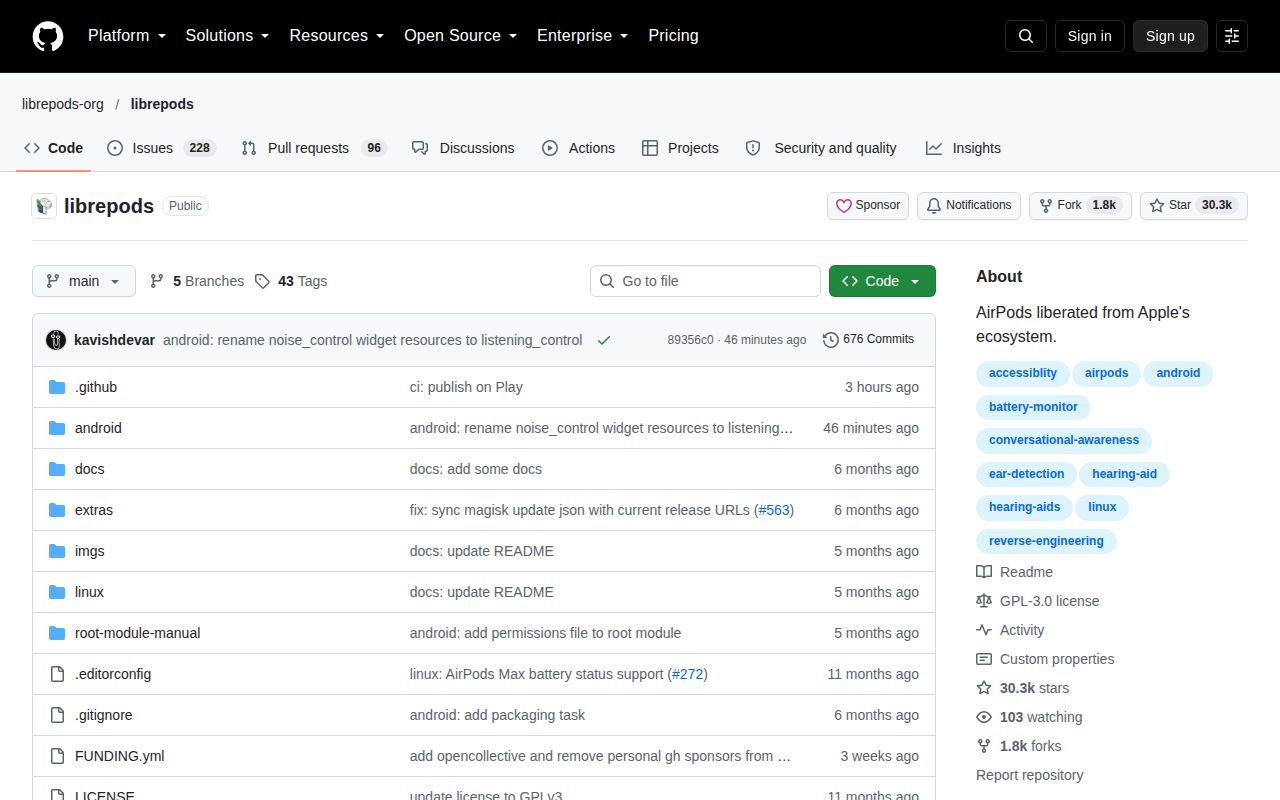
GitHub listed 30,334 stars and 324 open issues and PRs when checked on October 16, 2026. The last push was that day, and v1.0.4 shipped Android translation updates and revised distribution messaging. Recent issue and PR activity included a firmware-display request and the Linux rewrite. This is active development. The unresolved platform work still matters more to a prospective user than the star count.
The v1.0.4 notes also explain a practical purchasing distinction: some Play Store features require an in-app purchase, while GitHub releases make all features available free. For an unsupported, unrooted Android phone, the project's own README points toward CAPod. OpenPods is another narrower option if a status notification is enough. I'd start with those simpler needs before changing a phone's privilege model just to reach AirPods settings.