The repository is a directory of streams
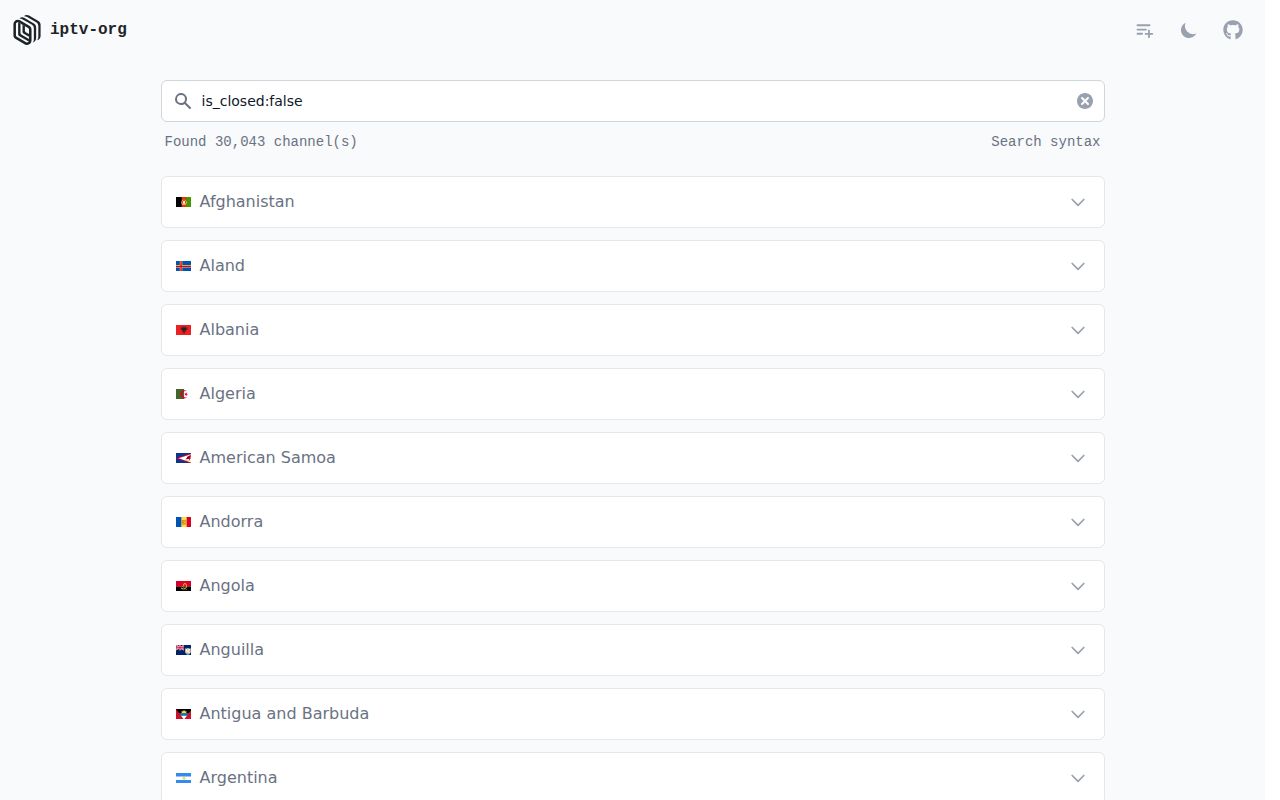
Our 3.9 MB checkout held playlist links and maintenance code, with no television footage. End users paste the main M3U address into VLC or another compatible player. There is no viewing interface, subscription system, or video archive here. That boundary makes the project unusually easy to try, but it also puts playback quality beyond the maintainers' direct control because other parties host each live broadcast.
Its 564 files contain playlists, TypeScript maintenance scripts, tests, and contribution machinery. Channel descriptions come from iptv-org/database; schedules use tools in iptv-org/epg; structured access belongs to iptv-org/api. You can consume a playlist without cloning any of them, while an app built around the catalog may need all three companion data sources.
Smaller feeds make the public URL more useful
The 3.9 MB repository publishes public feeds in 7 groupings: category, language, country, region, subdivision, city, and source. Pick the smallest feed that matches the screen you are building. A country playlist is easier to browse and diagnose than the all-channel URL, especially when your player refreshes metadata or checks remote logos every time it opens.
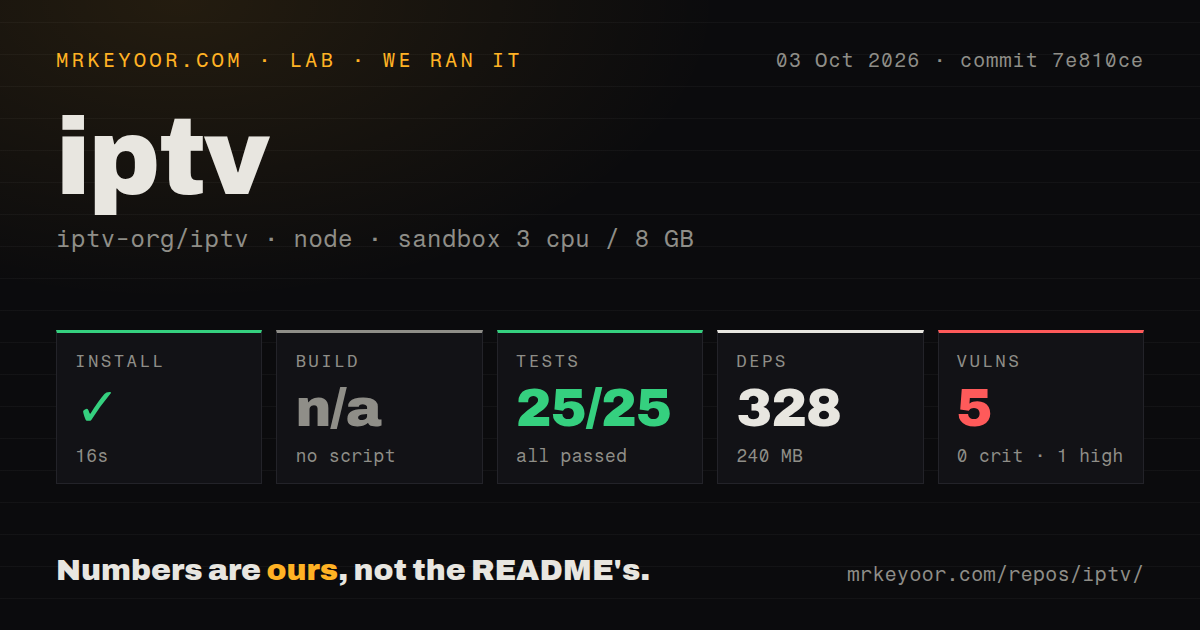
Contributors face a different setup. Our 3.9 MB checkout became a 240 MB installed tree after npm added 328 packages in 16 seconds. The package's postinstall command downloads current channel and stream data from the iptv-org API, so installation needs working network access. No account or secret was required in our sandbox, an unprivileged Node 22 container. The repository has no application server to configure and no Dockerfile.
What happened when we ran it
For our measurement setup, we cloned commit 7e810ce into a fresh Debian container with 3 CPUs, 8 GB of RAM, Node 22, and no secrets. Installation succeeded in 16 seconds. The project exposes no build script or target, so the harness skipped build. That is a repository choice, not a failed compilation.
Vitest completed in 33 seconds with 25 passed and 0 failed out of 25. The checkout held about 7,636 lines of source across 564 files, and we found a tests directory plus 5 CI workflow files. Those are useful maintenance signals for code that validates, formats, generates, and updates playlists. They do not measure stream startup time, channel uptime, video quality, or geographic availability.
Npm audit reported 5 advisories in the contributor install
Our npm audit found 5 vulnerabilities: 1 high severity and 4 moderate, with none critical or low. The supplied lab result does not identify the affected dependency paths, so it would be wrong to blame a named package or claim that opening the hosted M3U exposes those flaws. The finding applies to the installed Node toolchain and deserves inspection before that code runs with privileged network access or automation credentials.
The distinction matters because ordinary viewers install 0 of those 328 packages. They download a text playlist, then their chosen player contacts each channel host. Maintainers and automated contributors run the much larger dependency tree to process issues, validate entries, regenerate lists, and publish updates. For that second group, 240 MB on disk is modest, but the high-severity advisory should still block casual deployment into a trusted CI environment.
A passing suite cannot keep outside channels online
The testing guide requires at least 1 minute of watching before a submitted link counts as stable. It also asks contributors to restart the stream and check that a short segment is not looping. Links must be direct, non-tokenized, and correctly marked when geo-blocked. Some streams need a particular HTTP referrer or user-agent value. These rules show careful moderation, while also spelling out how many ways an otherwise valid link can fail on a viewer's device.
All 25 Vitest checks passed in our 33-second run, but those tests cover the repository's scripts rather than a permanent promise about every outside broadcast. The project provides a separate playlist:test command for link checks, and reports of broken streams remain part of normal maintenance. The FAQ also rules out VOD and explains that the public channel database is broader than the set of streams the maintainers currently possess.
October activity is current, while rights stay with each source
GitHub showed 140,363 stars on October 6, 2026. The repository was pushed on October 5, and the tracker held 249 open issues plus 3 open pull requests. Recent issue activity included approved additions, removals, and rejected broken links. There is no latest GitHub release, which fits a collection updated through commits and generated playlists better than a versioned application. The push date and active queue are stronger health evidence than a missing release tag.
The legal section says the repository hosts no video files and offers a channel-owner removal route. Its 5 CI workflows and 564-file checkout can keep formatting and moderation orderly, but they cannot grant viewing rights, guarantee regional access, or repair an outside broadcaster's server. Use the hosted feed for discovery, then add your own availability checks before it becomes a customer-facing dependency. If one dead link breaks the product, put this directory behind a checker and a fallback source.