Impactor replaces the Xcode signing path on three desktop systems
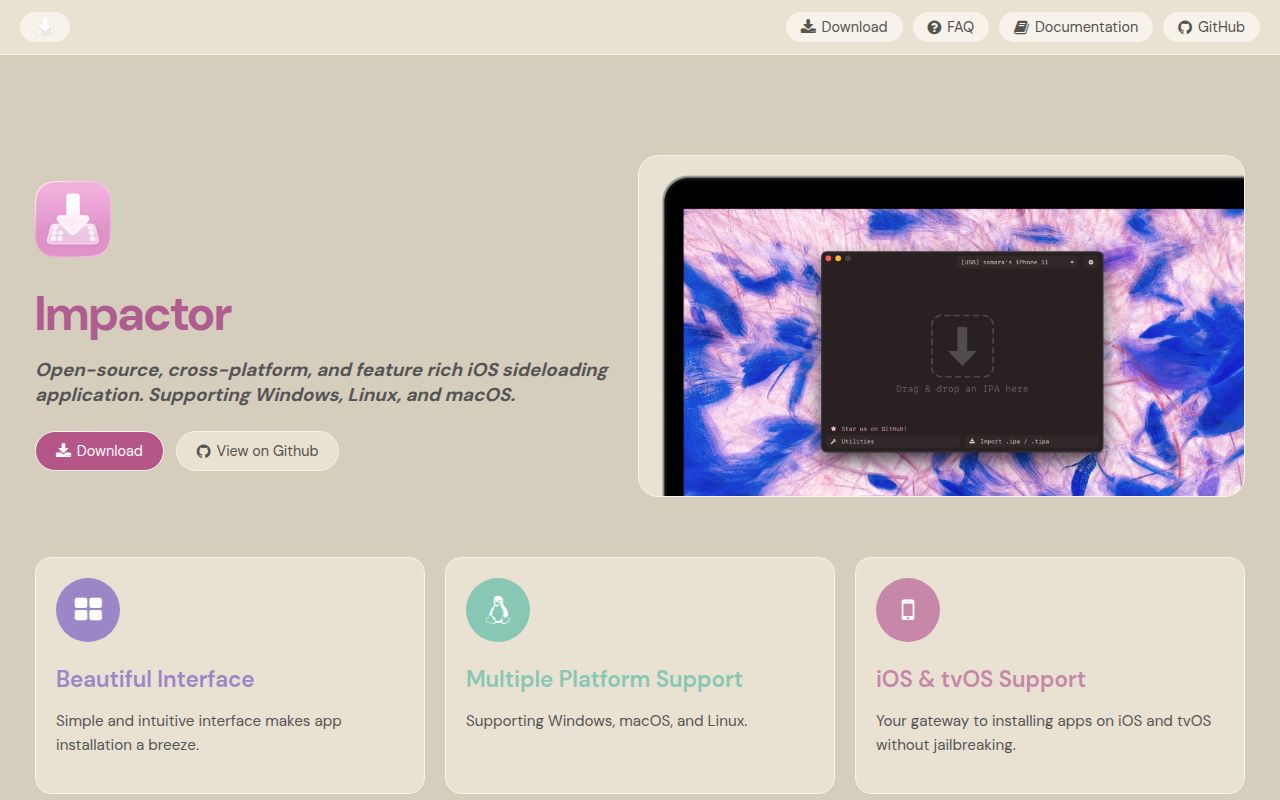
Impactor takes an IPA, an Apple account, and a connected device through the certificate, provisioning, signing, and installation steps that Xcode normally coordinates. It runs on macOS, Windows, and Linux, with a graphical app plus the plumesign command-line tool. Advanced options can change names, inject dynamic libraries or Debian packages, add frameworks and extensions, replace Cydia Substrate with ElleKit, and request supported entitlements from the app binary.
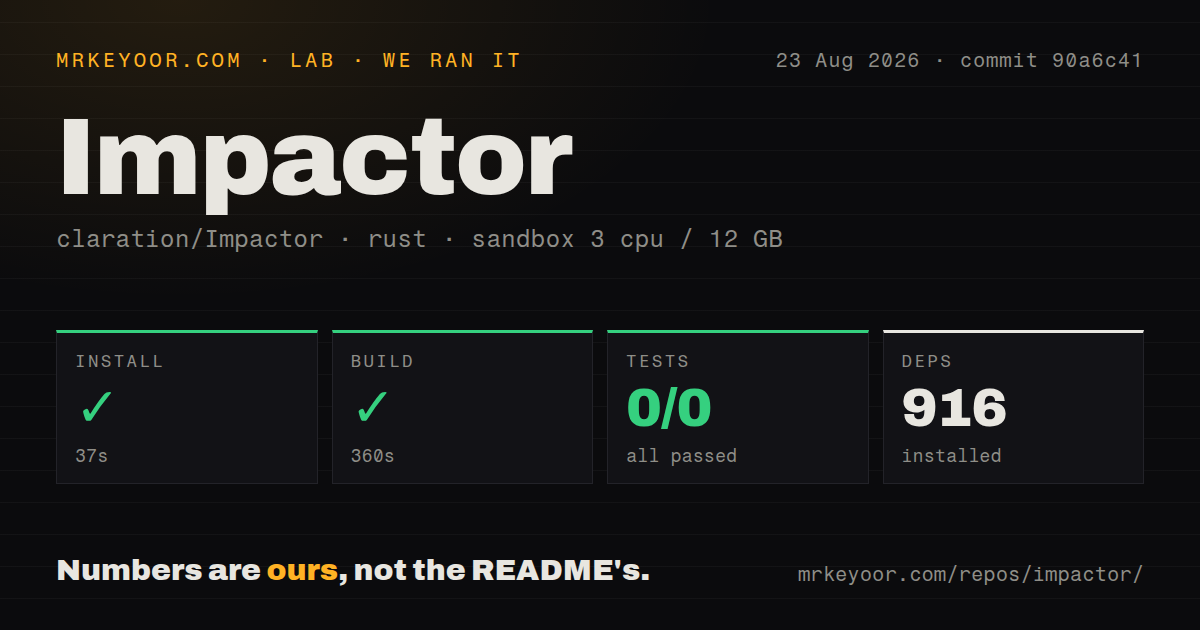
The source is smaller than that feature list suggests. Our commit 90a6c41 checkout contained 167 files, about 15,987 source lines, and occupied 4.8 MB. Installing the Rust dependency set added 916 packages in 37 seconds. Release builds are distributed as a universal macOS DMG, Windows executables for several architectures, Linux AppImages, and matching CLI binaries. Homebrew and Flatpak cover two common packaged routes, so most users do not need the 360-second source build we ran.
Apple still controls certificates, devices, and expiration
Impactor does not bypass Apple's provisioning service. It registers the device, creates a signing certificate, registers the app, requests a provisioning profile with the relevant entitlements, modifies the archive, signs it through Rust code, and installs it using the idevice stack. An Apple account is therefore part of the trust boundary. Users should protect its credentials and understand which local files contain keys, certificates, or pairing material.
A free Apple account is limited to 7-day provisioning and a limited number of apps or registered components. Paid accounts change those Apple-imposed constraints, but Impactor still depends on the account and service accepting each request. Pairing files are specific to one device and become invalid after the user re-trusts, updates, or resets it. That affects SideStore, LiveContainer, log viewers, JIT helpers, and other tools that depend on the exported pairing record.
What happened when we ran it
Our sandbox installed 916 Rust packages in 37 seconds. The build succeeded after 360 seconds in an unprivileged Debian container with 3 CPUs and 12 GB of RAM. cargo test then exited successfully in 11 seconds, but its result was 0 passed, 0 failed, and 0 total. The command was green because it had nothing to execute.
The repository scan found 3 CI workflow files, no Dockerfile, and no tests directory. We did not connect an Apple device, authenticate an account, sign an IPA, create a provisioning profile, or install anything. Those operations require external hardware and Apple services absent from the sandbox. The useful conclusion is narrow: commit 90a6c41 compiled in our Rust environment, while the repository's test target supplied no regression evidence for its signing or device code.
Linux and Windows need different device plumbing
Windows users must install iTunes so Impactor can use Apple's device drivers. On Linux, usbmuxd handles the USB connection. The README warns that some distribution udev rules stop the daemon when no device is attached; plugging in the phone before starting the app can help. Bazzite may also require a crypto-policy command before usbmuxd detects the device. These are host requirements, not Rust dependencies the app can bundle away.
Linux auto-refresh is also limited. Because usbmuxd lacks Wi-Fi connectivity in this setup, Impactor attempts refresh only while a device is plugged in. Pairing-file installation itself is USB-only. The 37-second package install says nothing about these runtime paths. If weekly refresh is the main requirement, compare SideStore's on-device workflow before choosing a desktop process that needs the cable at the right time.
Plumesign 2.6.0 can report success for an unsigned file
Issue #229 reports the Windows CLI logging that it saved a signed package and returning exit code 0, yet the output had the same hash as the unsigned input. The archive lacked both _CodeSignature and embedded.mobileprovision, then failed installation with a no-signature error. The reporter traced the path handling to a copy of the original archive rather than repacking the signed staging directory. Pull request #230 proposes a fix, but it was still open when checked.
That bug changes how the CLI should be used today. A successful message is insufficient. Automation should extract the output, confirm that a code-signature directory and provisioning profile exist, and run an independent signature check before sending the IPA to a device. The absence of any discovered cargo tests makes that external validation especially important. A GUI install may take a different path, so the issue should not be generalized beyond the reported Windows plumesign 2.6.0 command.
Pairing and authentication reports show service edges
Issue #234 reports current installation and app-list failures when the device response lacked PairRecordData. Issue #218 describes repeated two-factor prompts after an SMS code on recent macOS builds. Older issue #35 records a correct Apple password being rejected on Arch or CachyOS with version 1.1.1, followed by a Rust borrow panic. The older version makes it historical evidence, but the current reports show the same broad truth: device and account protocols change outside Impactor's release cycle.
GitHub listed 3,053 stars, an MIT license, and 47 combined issues and pull requests. The last source push was August 14, 2026, after release 2.6.0 on July 2. That activity argues against calling the project stale. Still, the release itself says Impactor is very new. Treat it as a useful supervised utility, not a signing authority: keep the original IPA, verify the result, and retain another installation route for account or device-protocol failures.